MALIGNANT ASSHOLE

or

My experiences with rectal cancer


A diary


Note that in the text below I will occasionally use complicated or technical words, and not explain what they mean. Feel free to look up their meanings, as I did.

Some of the information presented below may fall into the "too much information" category. Feel free to stop reading at any point.


Towards the end of 2007, I had been experiencing rectal bleeding. Not much, just a little bit with each bowel movement. Then on Thursday 29 Nov. 2007, I had a bout of hematochezia, which lasted for some five hours, from about 6PM until 11PM. Scared the bejeezus out of me.

During the episode I was able to reach my primary care physician at home. He recommended a Sitz bath (sitting in a tub full of the hottest water I could tolerate for ten minutes by the clock), but if that didn't work I should call 911. He had a vacant slot in his office schedule the next day, and that was now mine.

During the office visit, he tried to make a digital rectal examination, but my pain was too great for him to get anywhere. He gave me a prescription for Anusol, recommended regular Sitz baths, and gave me a referral to a gastroenterologist, James Frank MD, 1145 19th St NW #700, 202-424-2844, for a colonoscopy.


Dr Frank's first available appointment for new patients was on 2 Jan 2008 at 10:15 AM. He took my history, also tried a digital rectal exam (also unsuccessfully), and scheduled a colonoscopy at CASI (Center for Ambulatory Surgery Inc), same building (1145 19th St NW), different floor (#850), on 10 Jan 2008, arrival at noon for a 1PM procedure.

As usual for a colonoscopy, the day before I had to eat nothing after breakfast, and the night before I had to drink a huge amount of HalfLytely (a specially-prepared liquid), and take a laxative (bisacodyl). The purpose of this is to get all the crap out of my colon and give the gastroenterologist a clear view of the (interior) walls of my colon.

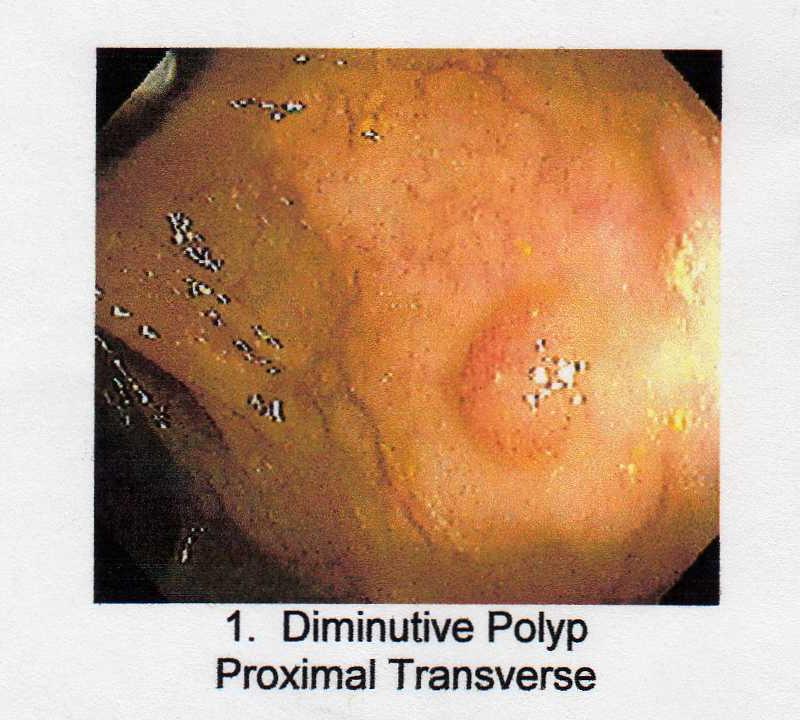
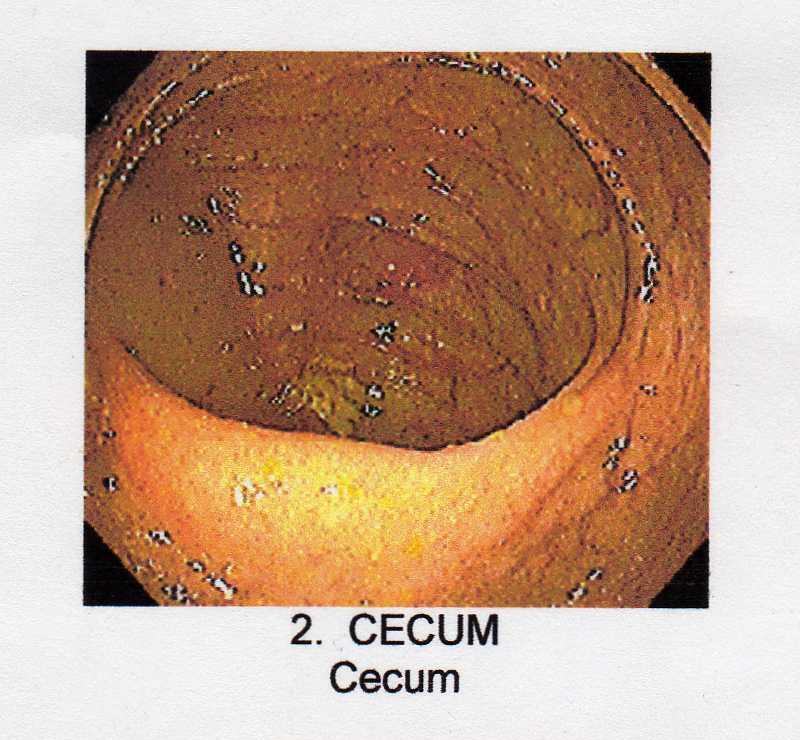
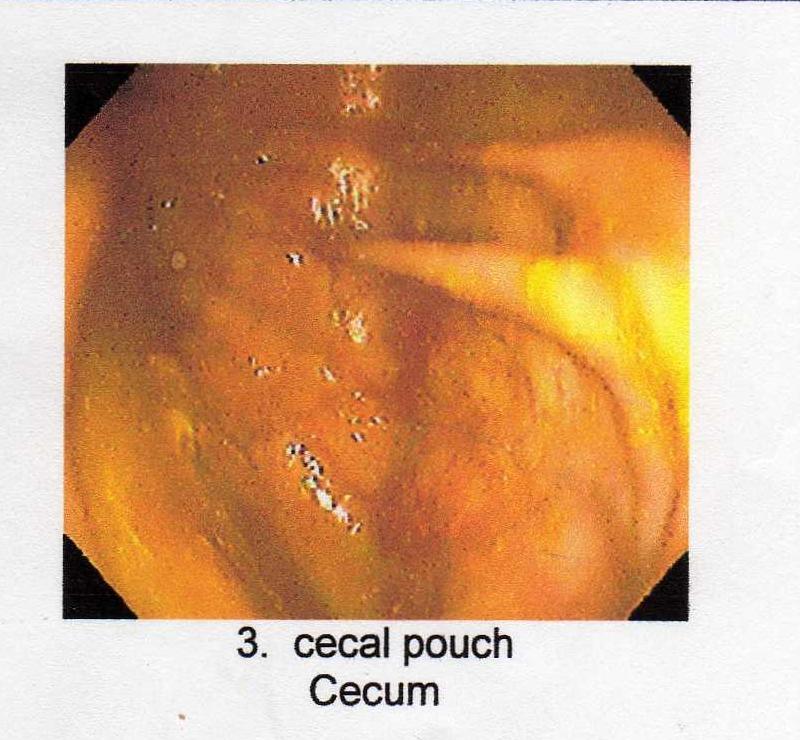
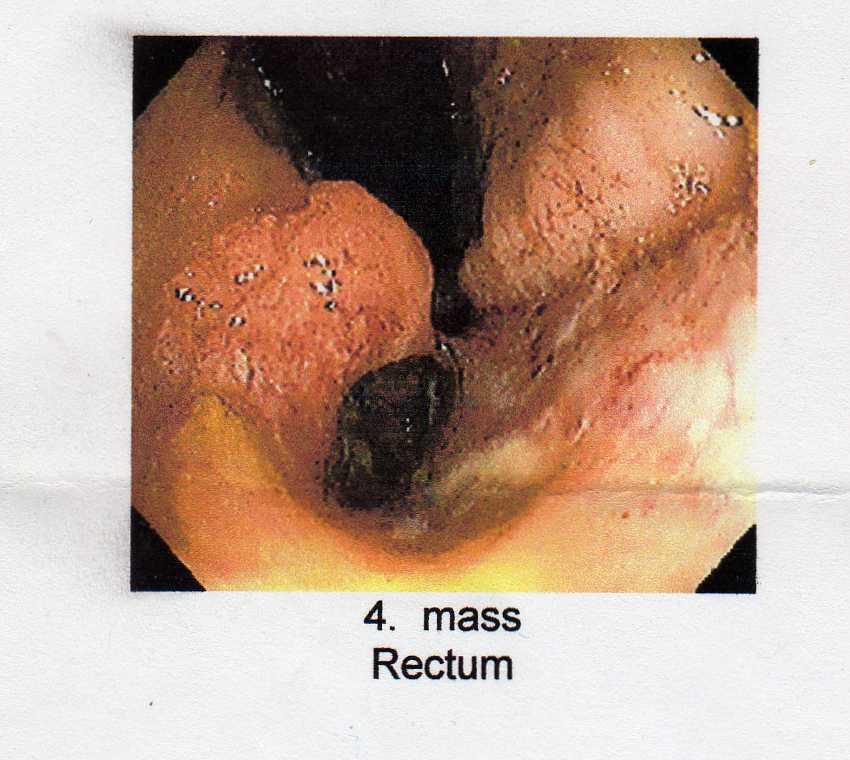
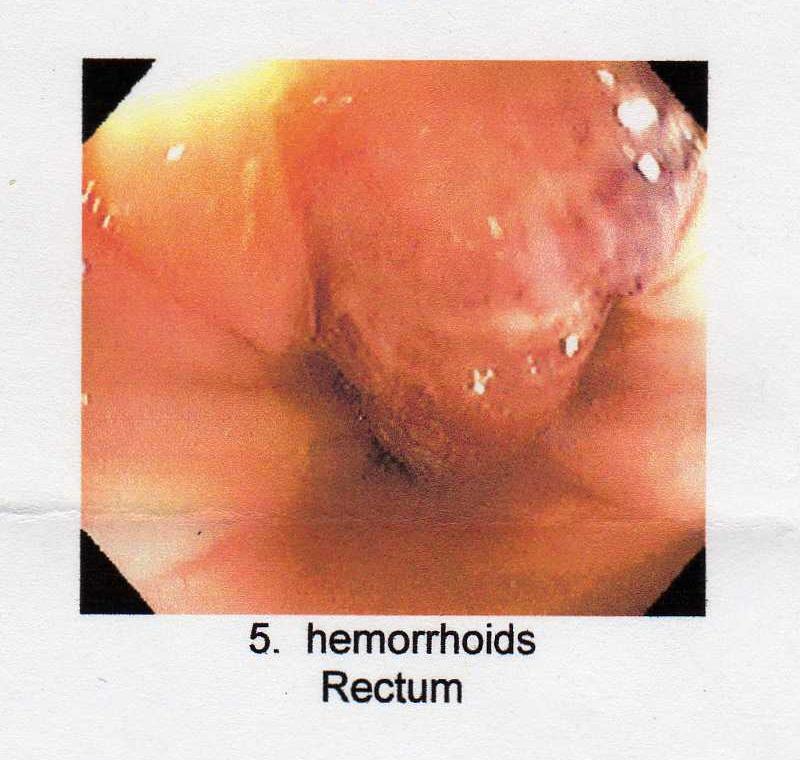
Photos from my colonoscopy can be found here: Traditionally, the gastroenterologist includes photos of the cecum (and cecal pouch) to demonstrate that the colonoscopy was thorough.

As you can see here, Dr. Frank found a mass in my rectum. It's not the black thing -- that's the colonoscope, which has to be retroflexed (into sort of a "J" shape) in order to take photos of anything that's close to the anal opening. It's those pink thing or things sticking out of the rectal wall that shouldn't be there.

The formal diagnosis of the rectal mass, by Caris Diagnostics, was "high-grade adenomatous tissue". Dr. Frank's note to my primary care physician said "Biopsies are suggestive but not diagnostic of adenocarcinoma."

Dr. Frank gave me a referral to a Dr. Stahl, a colorectal surgeon, 202-877-8484.

Because I had to be sedated for the colonoscopy, CASI wouldn't let me leave on my own. A relative picked me up, and I spent the night at that relative's home.


I made an appointment with Thomas J Stahl MD, 5530 Wisconsin Ave, Suite 1640, Bethesda MD, on 25 Jan 2008 at 12:15 PM. He took my history, also tried a digital rectal exam (unsuccessfully), and scheduled me for a biopsy.

His diagnosis of my condition was "154.1" (according to ICD-9 [International Statistical Classification of Diseases and Related Health Problems], this is a "malignant neoplasm of the rectum"), and the procedures planned (see Current Procedural Terminology available from the AMA) were "45990" (anorectal exam) and "45100" (biopsy of anorectal wall, anal approach).

My pre-operative workup occurred at the Admissions Testing Center (ATC) of the Washington Hospital Center on Monday 11 Feb 2008 at 4PM. At this time (or possibly before) I was assigned the Medical Record ID number "2705612", whereas my account number (the financial end of things) is different.

The biopsy occurred at Washington Hospital Center on Tuesday 19 Feb 2008 at about 3PM (they kept changing the time for the procedure). The "45100" procedure meant that there would be no incision on my skin, the surgeon (Dr. Stahl) would just climb in through my anus, do what he had to do, and leave. This also meant that in order to enter through the anus I had to be completely sedated, more so than for the colonoscopy -- the reason for this is that while the exterior sphincter ani muscle is under voluntary control, the internal sphincter ani muscle is under involuntary control.

After I woke up, Dr. Stahl came by the recovery room to tell me that the biopsy had shown that the rectal mass was cancerous.

Because of the sedation, WHC wouldn't let me leave on my own. A friend picked me up, and I spent the night at that friend's home.

The next day, Dr. Stahl phoned me at my home and referred me to an oncologist, David J Perry MD, at the Washington Cancer Institute [WCI, part of the WHC complex], 110 Irving St NW, Suite C2151, Washington DC 20010, 202-877-2843. I made an appointment for Wednesday 27 Feb 2008 at 8AM.


At this appointment I spent most of my time with an RN named Stacey Feldman. She was very open and forthright about my condition and prognosis. In general, at least -- she said that I would need a bunch of tests to determine the precise details of my cancer, and the exact path of my treatments.

The only cure for rectal cancer, or any type of cancer for that matter, is excision -- taking a knife and cutting it out. The challenges are (1) retain as much function as possible after the excision, and (2) making sure that all of the cancer is excised.

It turns out that in my case (rectal cancer) there is a complication, in that I am a man, with a (relatively) narrow pelvis. With a woman, and her (relatively) wider pelvis, the surgeon would have more elbow room, as it were, to do what he has to do, but for a man the space is more constrained. Hmmmm, I wonder where I'd have to go to file that sex discrimination lawsuit.


On Friday 29 Feb 2008, at 8AM, I had a CAT scan at WCI.

The night before, and the morning before, I had to drink three bottles of barium contrast medium. It's possible I've tasted something worse, but if so, my memory has been kind to me. I hope my memory will be similarly kind to me in the future about what the barium contrast medium tastes like.

Several folks had warned me about the scary "tunnel" that I would be subjected to during the CAT scan, so I was a little surprised to see that this particular CAT scan equipment was a ring about six feet across on the outside, with an aperture (the donut hole, if you will) about three feet wide. The business portion of the equipment was no more than four inches thick. I had no problem fitting into the aperture, and when the procedure was over I asked one of the radiation techs what the size limit for the equipment was (i.e., how obese a patient they can service). The tech said the limit was probably around 400 pounds.

The purposes for the CAT scan were (1) to try to determine how deeply my cancer had infiltrated my rectal wall, and (2) to see if the cancer had metastasized. Rectal cancer typically metastasizes to the lungs and the liver, so I was CAT-scanned from my neck to my thighs.

The procedure was over, and I was on my way, in about an hour.


I was a couple of minutes late to my appointment on Monday 3 March 2008 at 2PM with Michael S Porrazzo MD, Radiation oncologist, WCI, Suite CG118, and the officious snirp at the desk wouldn't let me in. She was particularly offended that someone outside of her office (i.e., Dr. Perry) had the temerity to make an appointment behind her back. At least she made a new appointment for me (see below).


Wednesday 5 March 2008, 9:30AM, Dr Perry again.

Stacey told me that the CAT scan showed no metastasis. Of course that doesn't mean there really is no metastasis, just that they found no evidence of it.

They did find that my kidneys have a bunch of cysts. Apparently this is normal, but I have "an approximately 1.8 cm cystic lesion emanating from the anterior cortex of the inferior pole right kidney", which needs to be checked further, so she scheduled an MRI (see below).

I told her I was curious about something -- based on some things Dr. Stahl said to me both before and after the biopsy (not detailed above), and what I had observed in this photo from my colonoscopy -- was anastomosis possible in my case? She said that, from her discussions with Dr. Stahl, it wasn't likely. We then spent some time discussing the implications of this.


Thursday 6 March 2008 at 3:30PM, Michael S Porrazzo MD, Radiation oncologist, WCI, Suite CG118. He turns out to be a smartass. We got along famously.

In radiation therapy, they first do a "simulation": take a CAT-scan-like image of the neighborhood of the cancer (the pelvis, in my case), construct a virtual (i.e., computer-based) 3D image of my insides, and plot the best paths through my anatomy to the tumor. The radiation treatments (25 of them, Monday through Friday for five weeks) consist of using a linear accelerator to generate some photon beams, and shine the beams through me on the calculated paths. Each of the beams shouldn't cause all that much damage to me, but where they intersect (the tumor) -- ZZZZT.


Saturday 8 March 2008 at 1:45PM, MRI. Because the MRI equipment is so heavy (about 100 tons) and because the magnet involved is so strong and can't be turned off, the MRI scanner is housed in a separate building between the main WHC complex and Children's Hospital. The MRI staff were running late, and my particular MRI was a "double" (both abdomen and pelvis) which took about an hour, so I didn't get out until almost 4:30PM.

The MRI was the "tunnel" -- a horizontal tube about as long as I am tall, and about as big around on the inside as I am on the outside. It was extremely noisy, so noisy that I was given earplugs. I was also given a buzzer, which I could use to signal to the tech that I needed his attention.

How does an MRI work? I stole this from somewhere else on the Internet: "When a person is in the scanner, the hydrogen nuclei (i.e., protons, found in abundance in the human body as water) align with the strong magnetic field. A radio wave at just the right frequency for the protons to absorb energy pushes some of the protons out of alignment. The protons then snap back to alignment, releasing this energy as a weak radio wave. Since protons in different areas of the body (eg, fat v. muscle) realign at different speeds, the different structures of the body can be revealed." As for why the process is so loud, "Rapidly switched magnetic gradients interact with the main magnetic field to cause minute expansions and contractions of the coil itself, resulting in loud noises and vibrations. This is most marked with high-field machines and rapid-imaging techniques in which sound intensity can reach 130 dB (equivalent to a jet engine at take-off)."

I didn't realize how valuable fidgeting is until I couldn't.


Monday 10 March 2008 at 9:00AM, Mediport placement. The surgeon's name was Dr. Buck.

The device he implanted is a "Power Port Implantable Port" from Bard Access Systems. The recovery room nurse gave me a discharge kit which included a wallet card which I can wave at building guards if the device sets off a magnetometer. The wallet card includes the information "REF 1708050" and "Lot No. RESA0105".

A friend picked me up at my home at about 8:00AM, we made it to the Interventional Radiology department by about 8:45AM, but they didn't get me to the operating suite until about 10:15AM, and the actual procedure didn't start until around 10:45AM. I was awake for all of (or at least most of) the procedure. They let me leave at 12:45, and my friend drove me to my home.

According to the written post-operative instructions, "You should not shower for 3 days after the port is inserted." So if I get all stinky, it's "doctor's orders". Heh    :)


Wednesday 12 March 2008 at 9:00AM, Dr Perry again

I didn't see Dr. Perry, but saw Stacey. We covered the likely side effects of the chemotherapy, which side effects I can deal with myself, and which side effects I should call her (or, after hours, the "on-call medical oncology/hematology physician") immediately.

She also gave me some fact sheets about the chemotherapy medicine which will be used, 5-fluorouracil, usually called "5-FU".

She also gave me a note excusing me from work "as he deems appropriate to receive his therapy."

As for the results of the MRI scan of the cyst in my kidney, it says "2.1 cm cystic lesion right kidney demonstrates imaging characteristics most compatible with an hemorrhagic cyst or cyst which contains proteinaceous debris and does not demonstrate internal septae or enhancement." In other words, nothing to be concerned about.

Also, "No evidence of metastatic disease in the abdomen or pelvis." In other words, based on both the MRI scan and the CAT scan (above), it appears my cancer has not spread beyond my rectum.

As to how far it has spread (i.e., what "stage" my cancer is in), this can't be determined with precision until the cancer is excised, but the current guess is that it is Stage 2 or Stage 3.


Wednesday 12 March 2008 at 2:00PM, Dr Porrazzo, simulation, rescheduled to 11:00AM.

I spent about half an hour with a nurse named Siobhan, who discussed some of the side effects of the radiation therapy. Since a bunch of these side effects are identical to the chemotherapy side effects, and since the radiation therapy and the chemotherapy will be administered simultaneously and it's impossible (for me at least) to figure out which therapy is causing which side effect, it looks like I will have to make a LOT of phone calls if I experience any side effects. Sigh.

I'm to see Siobhan every Tuesday after my radiation treatment, and Stacey every Wednesday.

At about 11:30, Siobhan turned me over to Charles, one of the folks who will administering the actual radiation treatments. He performed the simulation, which (for me) meant I had to lie face-down on a tray with my butt exposed. But before the simulation could start, Dr. Porrazzo showed up and, for purposes of orienting the images (he said), shoved a piece of equipment up my ass. Without benefit of anesthesia. So for the next half-hour, while they slid me back and forth through the CAT-scan-like donut taking pictures of my insides, I was face-down, weeping, with my butt exposed to the breezes, and with a piece of equipment up my ass. Then, at the end of the simulation, but before they removed the equipment and let me stand up, Charles tattooed my ass. Literally -- he brought out a tattoing needle, and tattooed three dots into me, one each on the outer corners of my buttocks, and one at the top of my butt crack. Thankfully, that was the end of the indignities that day.

Before I left, they handed me an identification card and showed me the procedure to follow -- change from street clothes to two hospital gowns (one to open in the front and the other to open in the back), leaving on my footware, placing my street clothes in a locker, wave the identification card at a specific scanner, and wait.


As of the evening of Thursday 13 March 2008, I still hadn't received any notification as to how and when my chemotherapy would start -- the radiation therapy would start on Monday the 17th, but the chemotherapy start was unstated. So when I received a message from a "patient educator" calling to discuss starting my treatment, I called her back and told her that the list of people who knew anything about when my chemotherapy was to start didn't include me. After several phone calls, they said that after I have my initial radiation therapy session on Monday the 17th I was to go to the Infusion Therapy Center, where I'd be hooked up to the chemotherapy equipment.


Monday 17 March 2008, 11:30AM -- First radiation therapy appointment

I arrived at about 11:00AM and followed the procedure described above, and waited and waited. It turns out WCI has three separate but identical radiation machines, each with its own crew of techs. The machines are named Alpha, Beta, and Delta (somebody appears to have forgotten part of the Greek alphabet), and I'm assigned to Beta. On this morning, one of the other machines had broken down, so the process was slowed down by having to funnel three streams of patients through two machines, so I didn't get out of there until almost 12:30PM.

During the simulation (see above), I hadn't noticed the significance of the laser beams cris-crossing the room, but it turns out that they designated the spots where I got tattooed. In the radiation room, the tech lines my tattoos up with the laser beams, and presses a "start" button. I lay still, and the machine swings around me, stopping at various places to deliver the radiation. The whole procedure, from when they call me back until they release me, takes about ten minutes.

My appointment time, Monday through Friday, is 8:50AM.

As I was leaving, the tech pointed me to a nutritionist who was waiting to see me. She just wanted to say "Hi". Presumably she'll go to work on me later.


When I was finished with the radiation, I went up to the Ambulatory Infusion Center to get my chemotherapy started. The tech assigned to work with me was one of those persons who don't do well when having to deal with variations from the norm, and as a result she didn't "get" me at all. She started off by asking me how I was feeling, and I gave her my usual response to that question, namely saying the word "sigh" with a downward emphasis. Well, that wasn't one of the answers she was expecting, so she asked her question again and I gave her the same answer. Third time, same result. She then consulted another tech who was working nearby and who had heard the whole dialog, and who told her that, yes, I could understand and respond to spoken English, and that she should just proceed. Tee hee    :)

By good luck, the delivery man, from UPS or Fed Ex or wherever, arrived at that moment with the package from Medstar Health Infusion Inc. with all of my equipment, and he had me sign a bunch of forms for its receipt. The tech then set up the equipment for me. This turned out to include: The pump was pre-programmed to dispense the 5-FU at the rate of 0.5 ml/hr, which means the bag contains 7 days worth of 5-FU.

The fanny pack had multiple compartments with lots and lots of Velcro strips, into which the 5-FU bag and pump fit quite nicely. There's even a (properly aligned) plastic window in the fanny pack, so the pump display panel can be monitored without having to open the fanny pack.

The tech showed me how to replace the 9-volt battery which powers the pump, and gave me a spare battery. Then she stuck a specialized 90-degree needle through my skin and into the port, taped down the needle, attached the end of the plastic tubing to the needle, and turned on the pump.

I left around 2:00PM.


Tuesday 18 March 2008, 8:50AM -- 2nd radiation treatment

Uneventful.

Getting used to the chemotherapy delivery system is not easy. I have to consciously override my proprioception (the body size / shape / position sense) and remember that I'm tethered to a device. I can't take it off when I sleep, or shower, or use the toilet. So far I'm okay, but I expect I'll have problems in the future.


Wednesday 19 March 2008, 8:50AM -- 3rd radiation treatment

Uneventful.


Thursday 20 March 2008, 8:50AM -- 4th radiation treatment

Uneventful.


Friday 21 March 2008, 8:50AM -- 5th radiation treatment

Uneventful.


Monday 24 March 2008, about 3:30AM -- My pump started beeping, and the display indicated that there was only 5ml of fluid left in the reservoir. The display also indicated how I could turn off the beeping, so I did.

At about 7:30AM the pump started beeping again, and this time the display indicated that there was only 3ml of fluid left in the reservoir. Again I turned off the beeping.

8:50AM -- 6th radiation treatment -- uneventful.

After the radiation treatment, I went upstairs to get a new bag of 5-FU. I got there around 9:15, and my appointment was for 12 Noon, so I checked in, told the door person that I was going for breakfast and that I'd come back. That was okay with her, so I went to the Blimpies there in WHC (it's open 24 hours a day, 365 days a year), and came back around 10AM. Around 10:30 I was called in -- the deliveryman had arrived with my stuff. It appears that the schedules of the infusion clinic are driven by when the deliveryman gets there.

I had a different tech this time, one who wasn't thrown by my use of the "sigh" response. But part-way through the procedure she asked me how the placement of something felt, and I said that it was uncomfortable. She asked me how she could make it comfortable, and I told her that she couldn't make it comfortable, that the entire infusion regimen was uncomfortable, and that I wouldn't begin to feel comfortable until after they actually took out the port.

I was finished there around 11:30, but I couldn't write this up and update the webpage, because a friend's personal life blew up that morning, and I spent the rest of the day trying to help.

It turns out that the new plastic tube from the pump to me is much shorter than the previous one, about seven feet rather than ten feet, which cramps my style and circumscribes my movements much more than before. Sigh.


Tuesday 25 March 2008, 8:50AM -- 7th radiation treatment

The Beta machine was out of service, so I was sent to the Alpha machine instead. The machines appear to be functionally identical, but there are some slight differences, the main one being orientation within the building -- in the Beta machine my head is pointing to the West while in the Alpha machine my head is pointing North. Also the Beta machine has a plate which reads "Clinac" (presumably the brand name), while the Alpha machine's plate reads "Clinac 21E".

In both cases I'm lying prone, on a narrow platform, with my head towards the body of the machine. The techs raise and reposition the platform, and my body on the platform, until all three of my tattoos are correctly aligned with the laser beams in the room. Then the techs leave the room and go to the control room to operate the machine.

During the procedure, there's a display panel on the machine right in front of my face. I don't understand any of the displayed values except one, the gantry orientation. It starts out at "0.0°", i.e., directly over my butt (remember, I'm lying prone), and the first dose is delivered at that position. Then the gantry rotates to "270.0°", i.e., to my left. One tech comes in and changes something on the beam head (a lens or something) and leaves the room, and then the second dose is delivered. Then the gantry swings back over me, through "0.0°" and on to "90.0°", i.e., to my right, and the third dose is delivered. Then the gantry swings back to "0.0°", the techs enter the room, lower the platform, help me off (if necessary), and send me on my way.

After today's radiation treatment, I had a status appointment with Dr. Porrazzo. Before I saw him, I had a session with a nurse I had never seen before. She's one of those people who assumes her listener knows what she means, even when she says something else. She asked me about my energy levels, and I said they were much the same as they always were, so she asked whether that meant I was seriously fatigued or just mildly fatigued. I said, "Neither", and explained that I wasn't fatigued at all, that she hadn't asked me about my fatigue level but my energy level.

With Dr. Porrazzo, we discussed side effects. I said that (as of this point) I hadn't noticed any side effects at all. I also hadn't noticed any direct effects, but since the direct effects were all up my ass, and I generally don't look there, I wouldn't expect to notice any. He said that towards the end of the course of treatment for rectal cancer they would probably want to have another colonoscopy or perhaps a sigmoidoscopy, to see for sure what has happened. Oh, joy.

I left around 10:00AM.


Wednesday 26 March 2008, 8:50AM -- 8th radiation treatment

This session took much longer than previous sessions. The reason, according to the techs, was that they were taking X-rays of me, in addition to giving me the radiation treatment. Because of this I wasn't able to get to my 9:00AM status appointment with Stacey until about 10:00AM.

Stacey introduced me to a new RN named Eileen who would be working with her. Stacey and I discussed side effects, both current (I hadn't noticed any) and future, and when they'd likely appear.

She also mentioned that the current idea was that after both the radiation therapy and chemotherapy stop [presumably they'll both stop at around the same time], there will be a hiatus of about three weeks before the excision surgery occurs. The reason for this is not to give me a break (though that would happen), but to evaluate the results of the therapies and only then to schedule the surgery.

I had phoned Stacey several days before, and as a result she arranged for and gave me my very own copy of both my CAT scan and my MRI, on a CD. When I looked at them later, they both looked quite impressive, even though for the most part I couldn't understand what it was I was seeing.

I left around 11:00AM.


Thursday 27 March 2008, 8:50AM -- 9th radiation treatment

Uneventful.


Friday 28 March 2008, 8:50AM -- 10th radiation treatment

Uneventful.


On Sunday 30 March 2008, a friend picked me up at my home at about 10:00AM to go to one of the large shopping malls about 40 miles away. On the way there, at 10:46AM, my pump started beeping, and the display indicated that there was only 5ml of fluid left in the reservoir. Say what? That isn't supposed to happen until tomorrow. I turned off the beeping, but remained mystified.

We purchased what we were looking for, had brunch, and then my friend took me home. On the way, at 12:55PM, the pump started beeping again, and indicated there was only 4ml left.

When we got to my home, I called the number for the "on-call medical oncology/hematology physician" (see above). A Dr. Kayser [sp.?] called me back, I explained to her what the situation was, that I was supposed to have my bag of 5-FU replaced tomorrow, and that what I intended to do was that when the bag ran out I would engage the various clamps that were placed along the line, and take the battery out of the pump. She said that that would be okay, and that my alternative was to go to the hospital and be admitted as an inpatient. I said thanks but no thanks, I'd take care of it myself. Dr. Kayser agreed, and said she'd leave a note for Dr. Perry on Monday.

At 2:58PM the pump beeped again, saying it was down to 3ml.

At about 4:30PM, I was getting ready to leave my home for some errands. I decided that it was better to shut everything down right then, when I had a mirror (to see where all the clamps were) and a table (to work on the pump), so I clamped the tube and took the battery out of the pump.


Monday 31 March 2008, 8:50AM -- 11th radiation treatment

The Alpha machine was down, so they were backlogged, and I didn't get out of there until around 9:30. As before, I went upstairs, checked in, told them I was getting some breakfast, went to Blimpies, and got back around 10:30. The deliveryman arrived around 11AM, recognized me sitting in the waiting room, and had me sign for the package then and there. The door person then let me in to the infusion area.

I had yet another tech, one I hadn't seen before, and to this one I explained what had happened, and showed her the clamped tube and the turned-off pump and the battery I had removed. I also explained that the tech who had worked on me last Monday (the 24th) had told me that in the equipment delivered to me, the tubing, from the pump to the port, was filled with saline rather than with 5-FU, and that the system had to be primed, by meticulously pressing buttons on the pump to deliver 0.5ml, then 0.5ml, then 0.5ml, over and over again, until all of the saline was flushed out of the line and the delivery of 5-FU to me could start. I also said that this [the priming] hadn't happened with the initial hookup (on the 17th), which gave me almost exactly 7 days of therapy, but when the pump was primed on the 24th, I got only 6 days of therapy.

The primary concern of the tech was that the bag still had a few drops of 5-FU left in it, and she went off to find out what to do about that. After quite a while, she came back and told me that there were two different types of pumps, one of which needs priming, and one of which doesn't. My pump is a non-priming pump, but the folks at "extenCARE", 7379 Washington Blvd., Elkridge, MD 21075, 1-800-852-2131, who prepare my 5-FU equipment, placed an orange label on the 24 March bag instructing the tech who installed it that the pump needed to be primed. The 17 March and 31 March bags had no such label, only the 24 March bag. The 24 March tech dutifully followed the instructions, and primed the pump, thus leaving me with only 6 days worth of 5-FU in the bag. The 31 March tech suggested that in the future I remind the tech working on me that my pump is a no-priming pump.

I didn't bother to point out that on 24 March, due to the bogus instructions from extenCARE, I was given a whole day's worth of 5-FU in about ten minutes.    :)

What with all the rigamarole, I didn't get out of there until around 12:30PM.


Tuesday 1 April March 2008, 8:50AM -- 12th radiation treatment

Uneventful.

Status appointment with Siobhan and Dr. Porrazzo went fine. Again no side effects noticed.


Wednesday 2 April March 2008, 8:50AM -- 13th radiation treatment

Again, they took X-Rays, so I didn't leave the radiation area until around 9:30.

I went upstairs for my 10:30 status appointment with the oncology team, but I had to cool my heels in the waiting room until well after 11:00AM     :(

I spent most of the time with Eileen, who was new at this, and as a consequence was very thorough. She elicited from me some changes since the therapy started, which may well be side effects, but in each case the change was minimal.

After she was finished with me, she brought in Stacey and Dr. Perry, and we discussed the progress in my case. For the first time I heard a precise date when the chemotherapy will stop -- Stacey said that the day I had my last radiation session, they'd remove the pump. Yay!

Then after a break of six or so weeks, I'll undergo the surgery. This means approximately early June.

I detailed to Dr. Perry the priming fiasco described above. He apologized for the screw-up, and said that I handled it well. He agreed with my assessment that while it was annoying, it wasn't a show-stopper.

We all acknowledged that today is the mid-point in my radiation and chemotherapy. Yay!

We finished up around Noon.


Thursday 3 April 2008, 8:50AM -- 14th radiation treatment

Uneventful.


Friday 4 April 2008, 8:50AM -- 15th radiation treatment

When I got there and (electronically) signed in, one of the Beta techs met me in the changing room and apologized for the delay, but the Beta machine was out of service, and that they'd have to fit me (and the rest of the Beta customers) among the patients at the other machines. However, when I was called back about fifteen minutes later, I was serviced on the Beta machine. So they got their delivery of photons (or whatever the problem was).

As an aside, the three bursts of radiation applied to me are of differing durations. I don't wear a watch, so these timings are approximate, but the first dose, the one at "0.0°" (right over my butt) is about eight seconds long, the second one at "270.0°" (on my left flank) is about thirteen seconds long, and the third one at "90.0°" (on my right flank) is about twelve seconds long.


Monday 7 April 2008, about 6:00AM -- My pump started beeping, indicating there was only 5ml of fluid left in the reservoir. Much better than last weekend.

8:50AM -- 16th radiation treatment -- uneventful.

As before, went upstairs, checked in, went to Blimpies for breakfast, went back, got the old connection removed and the new connection added. The tech who worked on me this time was the one who primed the pump two weeks ago. I was prepared to speak up if the equipment had arrived with "prime the pump" instructions, but it didn't. I was finished there around Noon.


This doesn't really fit anywhere, so I'll put it here. It's about pain.

Specifically rectal/anal pain. Now that I think back on it, each one of my poops, from about as far back as the rectal bleeding, was also painful. It wasn't *really* painful, and I could always control the amount of pain by regulating the amount of pressure I used. The most likely reason for why the digital rectal exams and so on were unbearably painful, while the pain during defecation was tolerable, is that during the exams I was not the one making the decisions on how fast, how deep, how wide, etc.

During the third week of my treatment regimen (the one just finished), my anus got progressively more painful. Not during defecation, that pain level remained about the same, but during the rest of the time. In particular during wiping -- during each pass it felt like my asterisk was a mass of dozens and dozens of raw, exposed nerve endings. The sensations were much the same the rest of the time. I'm not sure whether this means that my tumor has thoroughly infiltrated my sphincter ani muscle, or that my asterisk is just an innocent bystander caught in the circle of nukeage (they generally want to irradiate not just the cancer but also the ostensibly healthy tissue closest to the site), or what, but it's no fun.

Also, at the top of my butt crack (but below the tattoo) I have a furuncle. It's been there for over a year, and for must of that time it was just a minor nuisance, but one of the (non-visible) side effects of chemotherapy is reduced white blood cell generation. Because of that, or just on its own, the furuncle is now about an inch and a quarter in diameter and its pain is, um, exquisite. This plus the anal/rectal pain make finding a comfortable sitting position an adventure.

Stacey had given me a prescription for 5mg pills of oxycodone (Rush Limbaugh's drug of choice). When I got home on the evening of Monday 7 April, I took three of them, thus 15mg. No effect at all on either of my butt pains. Sigh.


Tuesday 8 April 2008, 8:50AM -- 17th radiation treatment

Uneventful.

Status appointment with Dr. Porrazzo went fine, except that he said I had nine more radiation sessions to go. I said, no, I had eight. He said that what confuses a lot of patients is that what happens on the first day is not a radiation treatment, it's a set of x-rays, and the first radiation treatment session occurs on the *second* day. Dang. That means my count of treatment sessions has been one off, and that today is:

Tuesday 8 April 2008, 8:50AM -- 16th radiation treatment

I showed Dr. Porrazzo my furuncle (where else can you get away with actually mooning people?), and he said they had nothing there in the radiation oncology department which could help. I said that I might enlist a very close and very tolerant friend to squeeze it until it pops (I can't do it myself, because I can't get a good angle on it).


Since I'm doing tangential disquisitions, here's another one.

At about the same time the original rectal symptoms started, I also started experiencing urinary hesitancy. The way I explained it to others was: think of the block of commercials on network television. On several occasions, I would head to the bathroom at the beginning of the commercial block in order to pee, but when the show came back on, I was still standing there, waiting. Eventually the urine stream started, but the hesitation was somewhat annoying. Since the symptoms were those of BPH (Benign Prostatic Hyperplasia), and I'm the right age for BPH to start, I just assumed that's what it was. Still, whenever I had a blood test, I asked to have my PSA (Prostate-specific antigen, a marker for prostate cancer) checked, and it always came up in the normal range.

Then when the rectal symptoms got worse, the urinary hesitancy got worse as well. I just figured everything in my underwear zone was going haywire.

So I was quite surprised when I read in the CAT scan results that my prostate was normal, and even more surprised when the MRI test results said the same thing, even though the urinary hesitancy consistant with BPH was still there, and getting somewhat worse.

It wasn't until about the second week of radiation and chemotherapy when I figured out what the connection was. I'd get a pee urge, go to the facility to relieve the pee urge, and while waiting I'd get a poo urge. Once I relieved the poo urge, either by defecation or flatulation, the urination could proceed. That didn't stop the dance, because usually during urination the poo urge kicked in again, and round and round and round. It takes quite a while for me to properly evacuate myself.

The explanation is in the anatomy of the male pelvis -- the rectum lives right next to the prostate, and the tumor has changed the geometry of the rectum, thus putting pressure on the prostate. So my prostate *is* blocking the (easy) flow of my urine, but it's not because of anything wrong with my prostate. In fact, my prostate is yet another victim of my rectal carcinoma.

Once I figured out the connection, I mentioned it to Stacey, and she concurred with my explanation, saying that urinary hesitance is very common in men with my particular type of rectal cancer.


Wednesday 9 April 2008, 8:50AM -- 17th radiation treatment

Uneventful, though one of the radiation techs noticed my furuncle, and brought it to my attention, saying it was brand new. I said, no, it had been there all along, it just wasn't until recently that it had grown big enough to be seen easily. They also took x-rays of me.

When I went in for my 10:30AM status appointment with the Oncology folks, again I started out with Eileen. I told her that today was "Show and Tell", that I had something to show her and something to tell her, and it was her choice as to which I would do first. She said "show", so I dropped trou and showed her my furuncle. She was suitably impressed, so I said that the "tell" part was that I had taken 15mg of oxycodone on Monday evening and the same again on Tuesday evening, and that in both cases the pain of the furuncle and the pain from my anus was not diminished in the slightest. She did her usual thorough examination, and then brought in Stacey and Dr. Perry. I showed them my furuncle, and they said that they would call Dr. Stahl, the colo-rectal surgeon who had done the biopsy on me way back then and who would (probably) perform whatever cancer-removal surgery which was to occur in the future. They also gave me a prescription for a Fentanyl patch, 25mcg/hr, worn for 72 hours, 10 of them. They also warned me that it would take 12-36 hours for the Fentanyl to get up to enough strength to do any good.

They also said that, other than all this, my case is proceeding fine.

I got the Fentanyl prescription filled, and a friend helped me apply it. When I got home, there was a message from Dr. Stahl inviting me to see him tomorrow at 10:30AM, Suite 2100, Physician's Office Building, North Tower, at WHC, 202-877-8484.

By bedtime, there wasn't enough Fentanyl in my system to provide any useable relief, so I took some Ibuprofen.


Thursday 10 April 2008, 8:50AM -- 18th radiation treatment

Uneventful.

Afterwards I went to see Dr. Stahl. I showed him my furuncle (yet another professional I've mooned in the line of duty), and he offered to drain it. I accepted, of course. While he set up, I told him that someone had mentioned to me (without seeing it) that it was probably a pilonidal cyst, but that I didn't think so. Dr. Stahl agreed with me, and after he numbed the site, lanced it, and started to "express" (i.e., squeeze) it, said that it really was a furuncle. When he finished, he taped some gauze over the site, and gave me a prescription for Keflex.

However, that night, as I was preparing for sleep, I took off the gauze, and found to my dismay that the furuncle had grown back to its previous size. I also found, again to my dismay, that the anal pain was still there, as was the furuncle pain, and that Fentanyl doesn't do anything for either of them. Sigh.


Friday 11 April 2008, 8:50AM -- 19th radiation treatment

Uneventful.

Between when I woke up and when I went to get nuked, I took a bath. To my surprise, the bath opened the furuncle, so I "expressed" it myself, as much as I could. I then taped some gauze over it, as best I could (I couldn't see what I was doing). The radiation techs removed the gauze (something about the extra material would interfere with the delivery of the correct dose of radiation), and when the treatment was finished, they put on some new gauze.

As an aside, I found that one way to deal with my anal pain is to put a good-sized dab of Nupercainal onto a 4x4 gauze pad and shove that into my butt crack with the Nupercainal resting against my anus. This eliminated that pain for at least a few minutes. Hmmm -- Fentanyl is a synthetic opioid narcotic 80 times more powerful than morphine, and it can't relieve this pain, while an over-the-counter ointment (it's just dibucaine) can. Who woulda thunk it?


One thing I wasn't prepared for is the prodigious amount of mucus being excreted through my anus. Everyone has some digestive mucus (it's what makes bran and other dietary fiber such effective laxatives -- the rough physical edges of the indigestible roughage irritates the inside lining of the intestines, which generates mucus to protect itself, and the accumulated mucus helps the former food slide on out), but this is unbelieveable. Unless I take careful precautions (some kind of disposable packing in my butt crack), I'll stain whatever I sit on, not to mention whatever clothing I'm wearing. My guess is that my rectum is reacting to the physical irritation of the radiation treatments in the only way it knows how to react to irritation.


Monday 14 April 2008 -- My pump started beeping around 1:30AM.

8:50AM -- 20th radiation treatment -- uneventful.

As usual on Mondays, I went upstairs, checked in, went to Blimpies for breakfast, went back, got the old connection removed and the new connection installed.

This time the tech left some of the equipment with me when she went off to do something else, so I wrote down the information about the needle which is being stuck into my port. It's a Port-A-Cath Gripper Plus, size 1.1mm (19G) x 19mm (3/4 in).

I was finished there around 11:30AM.


Tuesday 15 April 2008, 8:50AM -- 21st radiation treatment

Uneventful.

Dr. Porrazzo confirmed that I was almost finished with my radiation course, and that he'd inform Dr. Perry. Dr. Porrazzo also said that my blood scores should be in a textbook.


Wednesday 16 April 2008, 8:50AM -- 22nd radiation treatment

Uneventful, though they took a long time making x-rays.

Eileen was off, so Stacey did the honors. She said that on Monday, either before or after my radiation treatment, I should report to the infusion center, and they'd disconnect the pump from me. Yay!

She also concurred with Dr. Perrazzo about how good my blood test results looked. She said she wants to see me each Wednesday for at least the next few weeks, and that I should make an appointment to see Dr. Stahl in about three or so weeks so he can plan the surgery.


Thursday 17 April 2008, 8:50AM -- 23rd radiation treatment

Uneventful.


Friday 18 April 2008, 8:50AM -- 24th radiation treatment

Uneventful.


Monday 21 April 2008 -- My pump started beeping around 1:30AM.

8:50AM -- 25th radiation treatment -- the actual irradiation process was uneventful, but when it was finished the techs gave me a very nice "Certificate of Merit & Appreciation", something they apparently give to everyone who has completed radiation therapy.

As I was leaving, Siobhan diverted me for a final checkup, during which she gave me some discharge instructions (basically be kind to the area which was irradiated).

Afterwards I went up to the infusion folks, who removed the pump and all the tubing. Yay! I left the pump with the nurse who worked on me (I didn't catch her name, and she wore a mask while interacting with me).

When I got home, about 11AM, the very first thing I did was something I hadn't been able to do for the past five weeks -- I took a shower. Yay!


Tuesday 22 April 2008 -- first day back at work. Yay! Because my endurance and strength are still down somewhat I was careful to pace myself, but I put in a full day.


Wednesday 23 April 2008, 10:00AM -- Status appointment with Dr. Perry

Eileen was back, so she examined me, in her usual thorough fashion. Then Dr. Perry and Stacey came in, and they said that my blood tests were still fantastic. (One of the side effects of 5-FU is that it interferes with the work of the bone marrow, meaning that the patient can't produce as many red blood cells and white blood cells as before, thus leading to anemia and increased risk of infection, respectively. Apparently my blood test results have remained close to normal).

They wanted to see me after the surgery, but if I had any problems relating to my treatment and/or its recovery I was to call them immediately.


On Thursday the 24th, someone from Medstar Infusion left a message on my answering machine saying they wanted to make an appointment to come by and pick up the pump. On Friday the 25th, they called again, saying that if I didn't return the pump to them, they would bill me for the cost of the pump, some three thousand dollars. I called them back and told them that I had left the pump with whoever had worked on me at WHC on Monday. Sigh.


On Friday 2 May, someone else from Medstar Infusion left two messages on my answering machine. The first was about picking up the pump, saying she didn't want to have to send me a bill for some three thousand dollars for the pump, and saying that I hadn't called them back after their previous calls to discuss the situation. Say what? I had phoned them last week.

The second message was about three minutes later from the same person, and she said that she had just (!) received a call from the Washington Hospital Center, saying that they had my pump. So let me see, the folks at Medstar Infusion/extenCARE screw up my chemotherapy dosage (see above under 30 and 31 March), can't keep track of property, and make statements to me which are, um, factually inaccurate. Apart from the actual physical pain in my actual physical ass, the folks with Medstar Infusion are the biggest pain in the ass.


Let me revise that a bit: a bigger pain in the ass are those friends and acquaintances who, when they learn of my diagnosis, try to impose their current dietary supplement enthusiasm on me. "Oh, you must take Supplement XYZ, because it promotes blah and blah, and prevents harmful blah from forming." However, not three minutes before, I had someone else say, "Oh, you must take Supplement LMN, because it promotes blah and blah, and prevents harmful blah from forming, but be sure you don't take that XYZ supplement instead, because it doesn't work." I usually receive these pronunciamentos with a look of bemused idiocy and with non-committal statements, but it's all I can do to restrain myself from hollering, "Look, I know you mean well, but please keep your quackery to yourself." These folks are a bigger pain in the ass than even the Medstar Infusion folks. Sigh.


Monday 5 May 2008, 2:00PM, Suite 2100, Physician's Office Building, North Tower, at WHC, 202-877-8484 -- Status appointment with Dr. Stahl

I arrived on time, but Dr. Stahl seems to have been seriously overbooked, as I didn't get to see him until well after 3PM. He performed a digital rectal exam, and surprisingly it didn't hurt. Sure, there was discomfort, but there was nothing like the howling pain that I had in earlier digital rectal exams (see above). He said that the tumor was greatly reduced in size, and said that normally the biggest reduction in this type of tumor comes in the weeks and months *after* the radiation therapy and chemotherapy stop. However, because of the location of the tumor, he is still thinking that an "abdominal-perineal resection" is the most appropriate surgical procedure for me. Go ahead, look it up.

He wants to see me again in a couple of weeks. I was out of there a little before 4PM.


An "abdominal-perineal resection", also called an "abdomino-perineal resection", is a seriously mutilating operation, resulting in the complete surgical removal of the rectum and the anus, and the creation of a permanent colostomy. The reason for performing this operation, as opposed to other operations, is based on what the rectum does, and how it does it.

The rectum is primarily a reservoir -- the bolus of former food, after passing through the small intestine and the colon, accumulates in the rectum. At a certain point, your rectum signals to your brain that "we're getting full down here". This signal is what toilet training your rugrats is all about -- recognizing when the signal occurs, and then defecating appropriately. The problem is that that signal is generated in a particular place in the rectum, namely the lower third of the rectum. And that's right where my cancer is.

It's technically possible to remove just my cancer and the part of the rectum where it is attached, but this would most likely obliterate the part of the rectum which generates the "I'm getting full" signal. Which means I would have no way of telling how full or not full my rectum is, which means I would be dribbling shit uncontrollably. Since the uncontrollable shit dribbling would be a direct consequence of the removal of the part of the rectum where my tumor is attached, the thinking is to get rid of the rectum entirely and divert the colon to an opening in the front of my abdomen, i.e., a permanent colostomy.

Everyone I've talked to who has either had a (temporary) colostomy, or who had known someone who had a (temporary or permanent) colostomy, has said that it's no big deal, that making the adjustment to a colostomy is easy, as is the management of the colostomy and related apparatus (i.e., the bag). Nevertheless, there would be a loss. If nothing else, I've spent the last half-century developing my farting techniques, and it's not possible to fart through a colostomy.

Since the rectum would be removed, there would be no reason to retain the anus, so that would be removed also, and the spot where it's located would be sewn up. This means that the old saw which goes "Opinions are like assholes, everybody has one" would no longer be true in my case. Oh, I'd have opinions, I just wouldn't have an asshole.

I don't know if it's possible, but if an "abdominal-perineal resection" turns out to be necessary in my case, I'd like my surgeon to not discard my anus, but instead to divert it to a taxidermist, and have it mounted on a plaque. After all, how many people would have the opportunity to be able to say "You can kiss my ass, and there it is, on the mantel".


There's something else about men undergoing an abdominal-perineal resection. It's in all the literature, but they (understandably) don't try to draw a lot of attention to it. A certain percentage of men who have an abdominal-perineal resection end up with permanent and irreversible impotence, i.e., inability to achieve an erection.

The reason for this is that the motor nerves which enervate the corpora cavernosa (the erectile tissue) pass through the prostate and then across the rectum on their way to the spinal cord. During an autopsy, when the physician has all the time in the world and doesn't have to worry about whether the patient will survive, the physician can trace the path of the nerves. The observant physician will notice (1) in each man the nerves run in a slightly different location, and (2) there is nothing about the nerve which says "I'm a nerve". Because of this, the surgeon usually can't determine exactly where the nerves are when he's cutting out the rectum. As a consequence, a certain percentage of men who undergo an abdominal-perineal resection are left permanently impotent.

What percentage? That depends on what kind of surgeon is doing the surgery. General surgeons are trained to perform abdominal-perineal resection, but they don't do it very often, and the impotence rate among their male patients is about 60%-70%. Colorectal surgeons, on the other hand, perform abdominal-perineal resections every few weeks, and as a result have a much better "feel" for where the nerves are. The impotence rate among their male patients is about 8%-12% -- not zero, but much less than for general surgeons.

If the surgeon cuts those nerves in me, then I'm fucked. Or, more accurately, I'll never be able to be fucked again. I've tried to explain to some of my female acquaintances that if they want to blow me they'd better hurry up, but that approach isn't very effective.

The literature, when discussing this surgically induced impotence, says something along the lines of "a loving and understanding partner and a secure and stable relationship will help the patient cope." How a patient without a partner or a relationship is supposed to cope is not discussed.


The literature also says that following an abdominal-perineal resection, the patient stays in the hospital for about a week, followed by 4-6 weeks of bed rest at home. Sigh.


Thursday 22 May 2008, 8:30AM -- Status appointment with Dr. Porrazzo

He says I'm doing fantastically well.


Earlier in the week I had called Nurse Feldman to arrange to pick up a new prescription for pain drugs. During the call, I mentioned that my the site of my MediPort was still painful, and had been painful since it was installed. She was concerned that possibly something had gone wrong with the MediPort, so she told me that after I saw Dr. Porrazzo, I should stop by her office and someone would take me down to the Interventional Radiology folks.

So I did, and they did. One of the Interventional Radiology nurses (all of whom seemed to be Filipina, as they responded when I spoke to them in Tagalog) stuck a needle into my MediPort, and got some blood out. Then (after an hour or so) I was taken into one of the operating suites, where they had an X-ray machine, and they injected some radio-opaque dye into the port, and everything looked good. At least that's what they said -- I was able to watch the X-ray display as they injected the dye, and though I saw stuff moving I couldn't interpret what I was seeing.

The ensuing dialog went something like this: So they didn't remove it, or reset it, or do anything to it. The reason it's supposed to remain in me is so they can easily give me some more chemotherapy after the surgery. I guess I'm just going to have to remain in pain for the duration. Sigh.


Friday 23 May 2008, 12:30PM, 5530 Wisconsin Ave, Suite 1640, Bethesda MD -- Status appointment with Dr. Stahl

He gave me a digital rectal exam, and says that my tumor has shrunk even further than it had before. This isn't as positive as it may seem, because this means that it's still there. In about 10% of cases like mine, the tumor disappears entirely, and there's nothing to excise, thus no surgery. I'm in the other 90%.

So we discuss the mechanics of the abdominal-perineal resection, and when he'll do it to me. We tentatively set the date for Tuesday the 24th, or Wednesday the 25th, or Thursday the 26th, of June. I'm supposed to talk with his scheduling secretary early next week to make a firm date. I should be discharged from the hospital on about the 2nd or 3rd of July, and then spend spend anywhere from 2 to 6 weeks at home recuperating.

I tell Dr. Stahl that, for various reasons, I won't be doing the "home recuperation" at my home, but at another location. I tell him what that other location is, but I've found that there are more people reading this webpage than I've invited to do so, and not all of you need to know what that location is. So on this webpage I'll refer to it as "the recovery location".    :)

The actual surgery will take about five hours. The initial incision will be along the midline in the front, starting a bit above my umbilicus and extending down for about six inches. When Dr. Stahl says this, I respond with "What, no laparascopy?", and he says that he does a lot of laparascopic surgery, but this is cancer, and he wants to make sure that nothing is overlooked. Perhaps at some point in the future the laparascopic techniques will have improved to make it an appropriate alternative, but not now.

After the initial incision, the first thing he'll do is sever the colon from the rectum. Then he'll cut the rectum loose from all of its attachments along the back wall of the abdominal cavity. Once that's finished, and the rectum is attached only to the anus, he'll cut the anus out of the skin, and then pull out the combined rectum and anus. Then he'll sew up the former site of the anus, then cut another hole into the front of my abdomen, to the left of the midline at about the level of the umbilicus, and sew the severed end of the colon to the inside of this incision (thus making it a colostomy). Then he'll sew up the big incision.


Several people have remarked, either directly to me or to associates of mine, that this diary is "disturbing" to read. My response is that they're reading it, but I'm living it.


By the end of the week, they hadn't called me to schedule a time for my surgery. This seems to be intentional on their part -- if they schedule the surgery and tell me to show up, then it could be fairly said that they railroaded me into the surgery. Instead, they're waiting for me to initiate the contact with them, waiting for me to tell them "Yes, I want you to knife me." A clever bit of manipulation on their part.

Which means it's time for some serious decision-making on my part. It's one thing to be aware, on an intellectual basis, that there are some things worse than dying. It's something competely different to contemplate that inactivity here (i.e., not scheduling surgery) will most likely (but not 100% guaranteed) lead to my death by cancer in a few years, whereas my calling to schedule surgery will 100% guaranteed result in my being permanently mutilated, and my knowing, for the rest of my life, that I, by making that call, caused the mutilation to occur.

Well, as always when there are critically important, life-altering, decisions to be made, there is the "digital decision implementer", i.e., flipping a coin. So ...


And there's also actually making a decision, grabbing fortune by the foreskin, etc., so on the afternoon of Tuesday 3 June 2008 I called Dr. Stahl's scheduling assistant, Arlene Smith, 202-877-2683. She wasn't there, so I left a message saying that I was calling to schedule the surgery. In other words, I'm going through with it.

She didn't call me back, and on Thursday 5 June 2008 I received a small package in the mail from Dr. Stahl's office, saying that my surgery was scheduled for Wednesday 25 June 2008. I am to report at 8:00 AM for surgery starting at 10:00 AM. So that's that.

A closer look at the envelope showed it had been postmarked on Monday 2 June, the day *before* I had called. So they're railroading me. It doesn't matter, as I have already decided to proceed.


Dr. Stahl's diagnosis of my condition is, again, "154.1" (ICD-9: "malignant neoplasm of the rectum"), but the procedure planned this time is "45110". According to Current Procedural Terminology, this is a "Proctectomy, complete, combined abdominoperineal, with colostomy". "Proctectomy" is an odd-sounding word, but I suppose it's better than the alternative, "Rectectomy".


Wednesday 18 June 2008, 11:00AM -- Admissions Testing Center, Washington Hospital Center, 1st Floor, Room A101 -- pre-op testing (EKG, X-ray, bloodwork, etc.)

This was entirely routine, pretty much as advertised.


Wednesday 18 June 2008, 1:00PM -- Clinical Registration, WHC Main Hospital, Room 1 A 22 -- pre-op session with an ostomy nurse (marking my body with the best location for the colostomy, educating me on ostomy care, etc.)

The ostomy nurse spent most of her time with me telling me things which were of interest to her but probably not of great interest to me (such as persons in her profession used to be called ET [Enterostomal Therapy] nurses, and now they're called WOC [Wound and Ostomy Care] nurses, but she did give me a helpful pamphlet titled "Living with your colostomy". She also showed me some of the appliances and bags I will be using.

She also, as advertised, used a pen to mark the spot on me where my colostomy should be placed. Which was kind of creepy-feeling.


Wednesday 25 June 2008, 8:00AM -- Admissions Testing Center, Washington Hospital Center, 1st Floor, Room A101 -- admission for surgery


Wednesday 25 June 2008, 10:00AM -- Surgery

Recovery Coordinator reporting: the patient's "paid escort" brought the patient to the hospital on time (8 AM) and stayed all day, til 5 or 6. I arrived about 1:30 PM; around 3:15 PM the surgeon came out and reported that the surgery went "as planned" and there were "no surprises". There is no evidence that the cancer has spread, but it will be about 5 working days before the pathology report is in; that will determine the next action (full round of chemo or no).

The patient did have a message for all of you. He says that, for now, he is "holier than thou".

It's now almost 11 PM. I left the hospital after 9:30 PM, and the patient STILL was in the 'recovery room' - so I don't know where he'll be tomorrow. When I left, his pain - which he rated as "6" on a scale of 1 to 10, and later "4", was back to a "6" - even the good drugs they gave him via IV were not strong enough.

More will be added after I see him again.

P.S. At midnight the phone rang - it was the patient. He had been given a room finally - after 11PM. His pain meds (the strong IV kind) weren't working all that well; he doesn't think he'll sleep well. And with the leg compression devices he said he'd have trouble sleeping anyway.


Thursday 26 June 2008

The patient continued to complain of pain - that the pain meds just weren't working. At 8 PM, he informed me (recovery coordinator) that the reason is that his IV line, the one that gave him meds, had been crimped. When I spoke to him in the evening, he sounded much better and more like himself.

Earlier today, I visited briefly and he was complaining that there was an incessant "beeping" on the IV. The doctor for the other patient in the room said "I'll get nurse" to which he said "that's what the last person said", "I'll follow up" - "that's what the last person said". Well, while I was there, the nurse did show up stop the beeping. But it was some time later when the crimped line was found - about 24 hours of very little pain medicine following major surgery.


Friday 27 June 2008 -- 5 AM

The patient experienced "spectacular vomiting" (his words), which flummoxed the nurse. As of 6 AM, Dr. Stahl had not been reached yet. Per the patient, the vomit is watery and dark. The guess is that his lower GI tract is not working correctly yet; all he has consumed since the surgery is ice, water, and the IV fluids (no food).

6 PM - by 10 AM, he had thrown up three times; by noon, five times. It appears his bowel shut down and will restart itself. This is a standard result of this surgery and any surgery "on your gut" (the patient's words). Needless to say, he was NOT resting comfortably today. By 6 PM, however, he was sitting up in a chair and was feeling better. He did mention at noon that he was "off the meds". We'll have to verify that.


Sunday 29 June 2008 -- 3 PM

I (recovery coordinator) visited with the patient, taking him my part of the diary to read and comment on. He explained about the bowel not working - Peristalsis, the ring-like contractions through one's digestive tract, is what was not working correctly. This is apparently not uncommon in abdominal surgeries. But as of today, his bowels are working. He has had jello & beef boullion, and an appropriate amount of each has ended up in the colostomy bag - a good sign (no solid food yet).

Another comment from the patient (when he has been released from the hospital, he will update this site with more details of all of his experiences there). He had heard that the insertion of the Foley catheter is very painful. He has one, but he was completely sedated when it was inserted, so he has no recollection of that and therefore no painful memory of that. No planned date/time of removal as of now.

On the day of surgery, the surgeon indicated that the patient may be released as early as Tuesday. But Sunday night the patient still has his catheter in and still has not eaten any solid food. He is on a potassium chloride drip.


Wednesday 2 July 2008

I (recovery coordinator) received two phone calls yesterday requesting my presence at the hospital. The "wound ostomy nurse" made an appointment with me for "11:00 AM". I also spoke with Maureen, the clinical social worker, giving the recovery location address for the visiting nurses. I arrived at the patient's floor and announced to the nurse that I was here and was told the ostomy nurse would be with me shortly. I went to the patient's room - he was moved to a single room; now that he is no longer attached to the catheter, he can easily get to the bathroom when he needs to.

I got into the room before 11 AM. The patient seems sad or maybe depressed. Definitely not happy about what he has gone through. He had been through two more bouts of "spectacular vomiting" this morning, five times each bout. The nurse had just finished cleaning up the room as I entered. I pulled out some crosswords and the patient and I worked them. Finally, almost 12:15, Carol (the wound ostomy nurse) arrived. She decided to tell us what SHE thinks is important (what Medicare will pay for, what the visiting nurses have to provide vs. what the patient is supposed to have in the way of supplies) but eventually she got around to the important stuff.

Did you know the inside of your colon is bright red? Well it is. Just ask the patient to show you. The end of his colon is now sticking out of his stomach, next to his belly button. And the colon is pulled out and then around (click here to see the scar). It protrudes about 1/2 inch. The colostomy apparatus he uses (a two-piece structure) consists of an "appliance" which is taped to his skin around the colostomy, and what is called a "bag", but realy isn't; it's a tube. A clamp applied at the far end of the tube turns it into a bag.

The bag can be emptied by opening the clamp and releasing the contents, usually into a toilet (and then flushed normally). After cleaning the mouthpiece (as it were) of the bag, the clamp is re-applied, and normal activity resumes. Once a day or so, the bag is replaced with a new bag and about twice a week the appliance is replaced with a new one, but I'll let the patient describe that in more detail later.

So, there we are with Carol, and she is taking her time (after informing us when she arrived that she had to be somewhere at 12:30) explaining all of the steps in changing the apparatus. Cleaning the site and the bag. Shaving the hair on his stomach. All very interesting. Carol finished up after 1 PM and left. As I was leaving the patient's room, "Wadi" (the resident, low man on Dr. Stahl's staff, per the patient), came in to see the patient. The patient told him about the vomiting and the resident ordered an xray. Turns out, the patient has an Ileus (a disruption of the normal propulsive gastrointestinal motor activity from non-mechanical mechanisms - a temporary paralysis of a portion of the intestines following surgery). So as of this evening (7 PM), he is on NO FOOD NO WATER for 24 hours. Nothing by the mouth. Not fun.


Friday 4 July 2008 - the patient called yesterday evening to say that he has had more spectacular vomiting. They put him on an NG (nasogastric) tube. This is negative pressure, literally sucking out the juices from his stomach. Per his visiting "Rabbi", it is a putrid green (a very unpleasant looking green). The patient is also getting electrolytes and sugar water. Also, the patient cannot sit, and this is affecting his ability to walk. He can only lie down or stand up.

This morning, the patient was examined because his ass is not healing properly. Because Dr. Stahl had the next three days off, the doctor on duty is scheduling surgery for Monday morning. The patient called right back to say they are going to open his ass crack now (where they had sewed it up), clean it out, and sew him back up again. Today. This is typically done bed-side, but because he is so sore, they are doing this under general anesthesia. It's 12 - noon, and they have just arrived to take him away.


Saturday 5 July 2008 - 9 AM - The patient has had no food or drink for over 48 hours. Yesterday, the procedure included opening his butt (the patient's word). There was a large amount of necrotic tissue that was held in place by the sutures and it could not drop off (as would typically occur naturally). The necrotic tissue was debrided and the area was packed differently; but was not sutured again. This area formerly known as the anus is now being treated as a wound; the dressing will need to be changed twice a day. As time goes by, some parts of the wound will be moist (waiting to dry out/heal) and some parts will be dry (healing part). The whole idea here is to allow the body to heal itself.

The patient has seen what I have written to this point. He slightly edited what I have written. He has much to say for himself, but not right now. I also took his mail that has arrived at the recovery location. He enjoys the t-shirt that says "kcuf recnac".


Sunday 6 July 2008 - the patient called at 9:30 this morning: "The word of the day is 'Wound vac'". Tomorrow they will plug in a vac, which should remove dead tissue from the wound and leave the good behind (pun).

The patient's Ileus is not showing the slightest inclination of going away or even reducing.


Tuesday 8 July 2008 - The wound vac was installed. this is a vacuum which will (hopefully) promote healing. Also today, the patient reported that he was being "threatened" with having a PICC line installed. This line should provide nourishment, as the patient has not retained any food since before his surgery (almost two weeks now). We are not certain why the patient is receiving a PICC line when he still has his MediPort installed.

Since the patient's bout with the "spectacular vomiting", the patient has consumed no food; he has just started eating crushed ice. The crushed ice helps to whet the patient's whistle (so he says), and none of the ice has come out via vomiting. Also today, the NG tube was removed. The patient reports that the removal "was one of the wierdest things I've ever felt. The only thing wierder was putting the NG tube in."

And now, a word on the pathology. The cancer that was found and subsequently removed during surgery was determined to be Stage 2 rectal cancer. Prior to surgery, the guess was that the cancer was either stage 2 or 3. There is no evidence of any lymph node involvement or other metastasis. With stage 2, there is an 80% chance for survival of five years. Tonight's vitals (8 PM): BP 120/70; temp 97.9; pulse 100, oxygenation 98.


Wednesday 9 July 2008 -- The patient sat in a posture to get an xray. The xray generator worked - the technician said "Oh" and cam back had him sit in the same posture a second time - "Oh" and a third "Oh" - the third time, the receiving machine was finally turned on. Thursday 10 July 2008 -- The PICC line was installed (yesterday, if memory serves).

The patient is starting to eat broth. As of 9 PM he has not called to say that the vomiting has returned. We will take this as a good sign.


Saturday 12 July 2008 -- the recovery coordinator visited the patient. The patient is on a full liquid diet - but at three or four sips of juice, his body signals "You can take a break" so he isn't sipping very much. He's limited in the amount of volume he can consume (his words). Yesterday, the "wound" (formerly known as his anus) was 8 cm by 3 cm by 6 cm deep. The wound care people are saying the he will need to have the wound cared for for two to three months. The surgeon's staff say one to two weeks. Watch and see!

Last Sunday night, the patient was moved to a larger single room, overlooking a roof. From his room, you can see helicopters come to land on the heliport just out of sight. the patient reports that watching these helicopters is a welcome diversion from Jerry Springer. While visiting on saturday, a helicopter, sure enough, came by. Also during my visit, the nurse came by and took vitals again. Temp 97.6, BP 121/74. heartrate 85, pulse 20, oxygenation 98.


Tuesday 15 July 2008 - the patient was sprung last night. Here's what went on: all day, it seemed, I was getting calls about "he's being released today, what time can you come" or "we're releasing him tomorrow." Selfishly, I was hoping for Tuesday, as it would give me a free evening.

The PICC line was stopped Monday morning. When they changed the patient's wound dressing, the Percocet they gave him for the pain did nothing. They may resort to Dilaudid. With the amount of pain he faces for a dressing change, the patient is willing to "go for a loop" for a few hours to avoid the pain. I told the patient that while I am in the recovery location during his dressing changes that I will move to a different part of the building. The patient said he'd like to be in a different part of the building as well. So, by mid afternoon Monday, the plan for release was still for Tuesday. Then at 3:30, the PICC line was removed. All of the sudden it was, what time can you pick him up today?

I arrived at Washington Hospital Center Monday at 7:33 PM. Around 8:25 PM they fixed him up (changed dressing on the wound, got his clothes on him) and said they called for a wheelchair. After 9 PM he and I gave up waiting and we walked out to the car. I drove him to a local (near the Recovery location) CVS. We handed over four prescriptions, including two for pain (one for Dilaudid). The pharmacy tech said they had everything and we said we'd wait. I took the patient to the recovery location and returned to CVS. The pharmacist then told me that they only had "generic" Dilaudid. Knowing how much pain he is having, I demanded the brand. So they had to call two more CVS pharmacies before finding one that had any. It was after 11:30 PM when I returned to the recovery location with the drugs, some Cherry Coke, and Men's Depends (just in case he could not move quickly enough at night).

This morning, the patient ate a little canteloupe and a few bites of Cheerios for breakfast. A sliced meat sandwich for lunch (on a small roll). He kept napping and is mostly lying sort of on his side (keeping pressure off the colostomy on the front and off the wound on the back). When he moves, he looks like it must be painful. He grimaces fairly frequently, and I doubt that is for show. For dinner, we had Chicken Pad Thai (carry out) and he actually ate all of it. It appears his stomach may be returning to a more normal size.

Now the fun begins. I'm done, and I now return you to your prevously-scheduled writer, the patient. (He may allow me to add a comment or two as the recovery is continuing here at this location.)


Wednesday 16 July 2008, 9:00AM -- Status appointment with Dr. Perry

Cancelled by the patient and rescheduled


Friday 18 July 2008 -- Recovery Coordinator still here or here again. The patient is having a major pain the the ass. Literally. He cannot find any comfortable position to sit or lay down. Hence, he has not taken the major step of sitting in a chair to add to this diary. His appetite is starting to return, and he is successfully filling the colostomy bag.

On Tuesday, two visiting nurses arrived to check him out and set up everything ("between 1 & 3", so I went to the office briefly. At 12:20 the patient called me to say they were there, at the recovery location.) The patient had very little appetite on Tuesday but he ate several small meals. He also had a few incidents; the bandages from the hospital leaked and he ruined one couch pillow (no big deal, it was old) and soaked the bed/linens. All was washed. The bandage they gave him didn't last much more than 12 hours.

On Wednesday, the box arrived with the wound vac. The nurses came back and set it up. I never heard him scream, but the patient did take the Dilaudid. He describes the packing for the vac as a "permanent pyramid-shaped wedgie". Ouch. The patient actually came out and sort of leaned/sat at the dining room table to eat dinner.

On Thursday, I bought the patient some "real" diapers, the pull-up kind. Overnight he can't make it to the bathroom every time (probably the prostate issue and not the cancer issue). I also got a diaper genie. A friend came over to visit and helped organize the recovery room a bit. The patient's spirits are slowly returning. He seems more "himself" and not so much of a grouchy and in-pain person.


Monday 21 July 2008 -- The patient is showing signs of improved attitude and emotions. I credit that to the visitors - he enjoys the visits but sometimes tires quickly. I returned to the recovery location from running errands mid-day Sunday to find two friends from different segments of the patient's life visiting, all three having a lively conversation.

The patient continues to get up to eat meals, but otherwise pretty much tries to find a "comfortable" (OK, a least-painful) way to lie in bed. There is no "comfortable". He rarely gets up and only walks to the table or to the computer (but he has yet to sit long enough to take over here). My suggestion to you who know the patient - come over, and force him to walk around a little. Suggest he try to find a less painful way to relax in a chair or on a couch rather than his bed.

On Sunday evening, the patient decided he was experiencing enough pain and took two Percocet. He reported that he was planning to take two at 8 PM, two more at midnight, two more at 4 AM, etc., until the nurses came to change the wound dressing. Then he'd take the Dilaudid. OK, obviously he was in pain. But after the dressing change today he decided not to take any more pain medicine. He is concerned that the doctor cannot just call in a refill or additional medication if he runs out. So he's just living with the pain.

One more comment. So far, the patient seems to have a totally disrupted sleep pattern. Because he is lying down, he nods off and naps at various times. He is not getting a "full night's sleep" but is not awake and "up" the rest of the time. While some of this may be due to the surgery and resulting complications, I believe it is time to start adjusting back to a regular routine, and to try to sleep more at night - but I understand his pain. I suppose when I take him to a follow up appointment next week I should step in and ask the doctor about this complication.


Tuesday 22 July 2008 -- Hi folks. This is the Patient speaking.

First, how about a round of applause for the Recovery Coordinator, for what she's done and is still doing. I couldn't have made it this far without her help.

Even so, I have told her several times that I hope I will never be in a position to reciprocate. In other words, I don't want her or anybody I care for to go through what I've gone through (and am still going through).

Next I'd like to thank my friends and family for their cards, letters, phone calls and (most of all) their visits to me, both in the hospital and in the Recovery Location. Each one of them meant (and means) a lot to me.

Because of the enforced inactivity, in both the hospital and the Recovery Location, as described above by the Recovery Coordinator, my memories of pretty much everything since entering the hospital for the surgery kind of blur together.

After the surgery was scheduled, and the likely duration of the stay in the hospital and at the Recovery Location was established, I arranged for my items of intellectual stimulation (research projects, books, magazines, my primary laptop, etc.) to be placed at the Recovery Location. What I took with me into the hospital were some newspaper articles I hadn't yet read, but wanted to, and some Sudoku puzzles, and nothing else. I decided that while I was in the hospital, my intellectual stimulation would be provided by the Jerry Springer show.

Yeah, yeah, I hear you all gagging, but the show is a genuine cultural phenomenon, one which I hadn't been able to see much of. So I did. I didn't learn much, mostly because I seem to be impervious to what the show is trying to teach, but nonetheless it was entertaining and I'm glad I got the time to check it out.

Also, on the evening of the Friday immediately after my surgery (that would have been 27 June), I tried to read one of the articles I had brought, and it took me over three hours to do so. Apparently, the intraveneous pain medication, which wasn't doing a whole lot for my pain, was quite effectively derailing my train of thought. I'm usually pretty good with Sudoku, but you should have seen how badly I botched them while in the hospital. So none of the intellectual diversions I brought could work while I was drugged, leaving me to get as much enjoyment as I could from Jerry, Maury, Judge This, That and the Other, etc.


Saturday 26 July 2008 -- Those of you who know me know that my first name is a common US first name, while my surname is (or at least appears to be) long and complicated. Each of the doctors, nurses, techs, support staff, etc., who interacted with me tried to call me "Mr [surname]", and so would ask me how to pronounce my surname. I would tell them that whatever pronunciation they used would be alright with me. My idea (though I didn't share this with them) was that I was in the hospital to get better, not to argue with strangers about how to pronounce my name. Most went along with the program, some calling me "Mr [butchered surname]" or, more often, "Mr [first name]", but some got really bent out of shape, as if I was withholding something of value from them, something they deserved to have shared with them. Of course, that is exactly what I was doing (withholding something of value to me [my correctly pronounced name] from them), but it was interesting to watch who would be offended by this, and how they'd display their pique. This observation also holds for interactions with me out of the hospital, but in the hospital, with so many strangers having momentary interactions and all trained to at least try to address the patient by a title of respect ("Mr [surname]"), there were many more of these reactions on a daily basis inside the hospital than outside it.


Now a few words about the wound vac, or the butt vac as I and others have been calling it (this topic and several others have been suggested by the Recovery Coordinator's cook, whom I must also thank for support above and beyond the call of duty). While I was in the hospital the folks there attached a wound-vac to the wound where my anus had been. A wound-vac operates on a very simple yet powerful principle - wounds are wet, and healed wounds are dry. The wound-vac helps to accelerate this process by sucking out all of the liquid it can from the wound site.

The secret ingredient in this is the skin-prep - a liquid goo which, when spread over skin, dries into a plastic sheet which adheres to the skin. In my case, they spread the skin-prep from the back of my scrotum to the top of my butt-crack, and from midway on one butt-cheek to midway on the other butt-cheek. When it dries, they then stick a precut foam strip into the wound, lay the foam strips across the skin-prep to a spot (different with each dressing change, but always on my right butt-cheek) where they butt the foam strip to a plastic disk. More skin-prep is placed over the foam strips, and plastic adhesive strips are then applied to ensure an air-tight seal.

From the center of the plastic disk, a clear plastic tube, about ten feet long, leads to the suction pump. Once the pump is turned on, the moist uck is sucked from my wound through the foam, then through the line and then into the uck reservoir in the wound-vac hardware.

The actual wound itself is insensitive to pain (no nerve endings), but the healthy skin around the wound is sensitive. And the peri-anal region has, from what I've heard and felt, the greatest number of sensory nerves per square inch on the human body, so there's a lot of sensitivity there, and pulling off the skin-prep or manipulating the wound in any way, sets me to howling. Not a single one of the pain-killing narcotics prescribed for me (Percocet, Dilaudid, etc.) is able to reduce my pain in general at all (I appear to be relatively impervious to orally-administered doses of narcotics) and nothing can stop the pain of the dressing change, so, like clockwork, every Monday, Wednesday, and Friday, both in the hospital and in home-health care setting at the Recovery Site with the visiting nurses, I'm howling, yelling, and weeping. The Recovery Coordinator has left the Recovery Site to avoid hearing me, and I don't blame her. I'm willing to put up with the agony because I know it is promoting the healing process, and it is, in the long run, helping me to get better, but that doesn't make it any easier to tolerate the pain.

I didn't get a chance to closely observe the wound-vac they used on me at the hospital, but the one here at the recovery site is a "Acti-VAC" [Vacuum Assisted Closure] from a company called KCI, in San Antonio, TX 1-800-275-4524.


And now a brief comment from the Recovery Coordinator. It was my hope that the patient would have felt like adding to this diary, on a daily basis, and more quickly and fully recount his experience in the hospital in his words. But the fact is that his pain has been great enough that he has been on narcotics for the time he has been at the recovery location, at least until yesterday. He did add the note on the 22nd but has not felt like writing again until this morning. The "wound" has been a real pain in the ass. The patient stopped taking the prescription medication yesterday and opted for 800mg of Ibuprofen. This morning he was actually sitting in a chair (on a pillow) for longer than five minutes. Progress. Please continue to bear with him, and as he recounts his experiences they may come in brief spurts like the notes above. OK I will hand this back to the patient again and will continue to encourage him to write to all of you (and for the likely cathartic experience for himself).


Monday 28 July 2008, 2:30PM -- Follow-up appointment with Dr. Stahl, Suite 2100, Physician's Office Building, North Tower, at WHC

Arrived on time. Got in to see the doctor at 2:55 PM. One of Dr Stahl's assistants came in first. The Recovery Coordinator was excused from the room as the patient got undressed and his dressing removed. Dr Stahl looked at the wound and decided that it needs to be debrided. This activity involves knocking the patient out and then cleaning out the dead tissue. The procedure will be scheduled for Wednesday, after the patient's appointment with Dr Perry.

Dr Stahl may or may not have the patient stay overnight at Washington Hospital Center. That determination will be made after the procedure on Wednesday.

On the way home, the patient and the recovery coordinator were discussing thevalue of a support group for ostomy patients. The patient commented to the coordinator that the one thing he would try to glean from others would be "when will I stop feeling like a mutilated freak and start feeling like a heroic cancer survivor, or at least like a normal human."


Finally managed to upload a photo of my incision (in the front of the abdomen, with all the staples) and the colostomy (hidden inside the colostomy bag), taken four days after the surgery. Click here to see the incision and colostomy. Note how the incision goes around the umbilicus.


Wednesday 30 July 2008, 11:00AM -- Status appointment with Dr. Perry

Dr Perry said that four to six weeks of further chemotherapy might be appropriate, but certainly wasn't necessary. I stated my opinion, rather forcibly (and in fact perhaps too forcibly, as I was in a lot of pain), that nothing was going to happen until my butt wound was fully healed.


Wednesday 30 July 2008, 12:30PM -- Debriding of my butt wound, by Dr. Stahl

I was completely knocked out for the debriedment, but Dr. Stahl later said that he removed a "rind" (his word) of dead tissue around the wound, and that all that is currently left there is healthy skin around the wound. He suggested seeing him again in a couple of weeks, and in the meantime continue with the Visiting Nurses changing the wound vac dressing every couple of days.


Tuesday 5 August 2008 -- A friend stopped by the Recovery Location this morning for a visit. During the visit, she remarked that earlier that morning, while taking a dump, she started thinking about me and my situation. She realized that I will never again be able to perform the simple, universal action of taking a dump, of defecating. Instead, for the rest of my life, my feces will dribble out the front of my abdomen, through a stoma and into a bag. For the first time she understood how I could refer to myself as a "mutilated freak" (see above).

I suppose one or another of the various ostomy support groups could help me move beyond this view of myself. The only problem with that approach at this time is that I've contacted several of the ostomy support groups I've heard about, and not one of them has returned my calls. I suppose there are good reasons why they're all ignoring me, but I can't imagine what those reasons could be.


Wednesday 6 August 2008 -- Today I spoke by phone with Dr. Stahl. During the conversation, I asked him if it was normal to take this long for the rectal wound to heal after an abdominal perineal resection. He said that it wasn't, that only about 30 percent of persons with APRs take this long to heal. The problem, he said, is the radiation treatment I had had (see above). The irradiated area is difficult to heal.

Gee, thanks, radiation team.


Saturday 9 August 2008 -- A woman I've known most of my life stopped by the Recovery Location for a visit. You can't tell by looking at her, but a few years ago she had a severe stroke, and she's living every minute of every day with painful and crippling reminders of it. During the visit we happily discussed past events, current events, and future events, but as she got ready to leave, both of us were crying.

Most of you reading this, and most persons in general, believe that as long as you're alive, you're winning, you're ahead of the game. The reason she and I were crying is that we were sharing what both of us had come to understand, that sometimes continued existence is a torture, an externally imposed sentence, and that the alternative has its merits.

Please don't misunderstand, neither she nor I are contemplating doing anything as a result of our new understanding. It's just that she and I have (individually) decided to keep going in spite of what we've come to learn. I hope, and I think I can speak for her by saying that she also hopes, that the rest of you will never reach the same understanding we have, and that you'll never learn what it takes to keep going after having reached this new understanding.


Wednesday 13 August 2008, 10:15AM -- Follow-up appointment with Dr. Stahl, Suite 2100, Physician's Office Building, North Tower, at WHC

Hello, Recovery Coordinator here again. The patient has been struggling of late. He has been feeling some deep depression - who can blame him? - and is not feeling like doing ANY of his "usual" routine things, those things that give him pleasure. We have been talking about this some every day. I have tried to be sympathetic but I have no frame of reference, no way to truly identify with what the patient has been going through. WELL - today, he took his two Dilaudids on the way to the doctor's appointment, and still had the pain when Dr Stahl removed the dressing. However, there was good news! The "wound" has reduced enough in size that the patient has been freed! No more wound vac!

The change in the patient is visible. He actually LOOKS like he feels better (some of that may be the residual Dilaudid). As we rode back to the recovery location from the hospital, he didn't seem to grimace over the potholes (except for the major bumps). He was more pleasant to converse with. I'll even add the that smell from the wound was significantly reduced.

Over the last four plus weeks, the patient has stunk more and more up until each surgeon visit. Understand, he has not had a shower since before his surgery (yes, he has washed up, but that just isn't the same). There is also the smell of the "uck" that was being sucked out of the patient's wound. As time would go on, the leftover skin would bring on a smell all its own. And it was not pleasant. Once he was debrided, the smell would be noticably gone. Over time, it would slowly return.

OK, so we returned to the recovery location and the patient said that he does not want to lie down (he knows he will stay there once he does), so he is in the "recovery room" right now, straightening up the table he will use as his 'workspace' to start doing those things he likes to do. He even took his plate from the dining room into the kitchen (a first!) I hope we have seen the bottom (as it were) and are on the way up the other side. If only we can find a support group and gain some insight into how to live with this.

Last night, after the patient cried (in front of me) over his situation, I went on line and found two potential support-type organizations. I sent emails to both, and both have responded - one with an email and one with a phone call.

While I am here and have the floor, so to speak, I will add that I personally appreciate all of the patient's friends who call and/or stop by to visit. Please feel free to call or stop by - I think he would prefer to know you are coming, but he enjoys all visits. If you come over, get him up and moving. Walk around outside, or even inside. None of us can make it alone. OK I'll get off my soapbox now.


Friday 15 August 2008 -- OK I said I'd get off my soapbox but I'm back, for a different reason. What a difference a day can make. Wednesday, all was wonderful. On Thursday, the Medstar Visiting Nurse came by to apply a dressing. First, she had phoned the surgeon and had him change his order for the dressing - the ointment that he had was prescribed (and we had picked up) should not be used - she knows better. So she applied the new dressing (TenderWet), stuck in a couple of squares of gauze, and topped it all off with a sanitary napkin (as an extra pad to catch the "uck").

When I returned to the recovery location that evening, the patient was back in his bed, looking as he had before Wednesday's doctor visit. Depressed, feeling like he had gone backward (which he had). We talked about his pain and his lack of ability to do the things he had been doing on Wednesday, and the patient asked me to call Dr. Stahl to discuss. So on Friday, I did just that. Dr. Stahl said there is no reason for the bandage to be uncomfortably tight, and the patient should not experience the level of pain I described. Dr. Stahl also said it is understandable that the patient would be depressed (who wouldn't be, considering all he had gone through?).

So I returned to the recovery location for the afternoon. As soon as the nurse arrived, I told her of the pain the patient is experiencing and of the conversation I had had with Dr. Stahl. The nurse showed me the packing, the dressing, etc. that was being applied to the wound. We agreed that small changes could result in big differences in how the patient felt. So when she finished, the wound was packed with the dressing, but no gauze before the sanitary napkin. The patient will be wearing a diaper (adult kind) for the duration, so if there is leakage, he won't destroy my belongings. (Aside: aha! Maybe I should buy a thinner sanitary napkin! I know my task for tonight now.)

It's progress. And he sat in a chair (two pillows underneath) for a minute. Hopefully he'll sit here soon and start writing again. We can only hope.


Wednesday 27 August 2008, 3:30PM -- Follow-up appointment with Dr. Stahl, Suite 2100, Physician's Office Building, North Tower, at WHC

Recovery coordinator here again. The patient is not cooperating. He is not spending time here writing. Some of his earlier contributions were made by me typing what he dictated (or what he wrote, lying in bed). The recovery is still taking waaaay too long. It has been over two months since his surgery. The visiting nurse came very late on Monday night and reported that the "Uck" was gone - the wound area is full of pink skin. But still the patient is experiencing pain such that he cannot sit in a chair; a "donut" pillow isn't much help.

I have a friend who is a nurse, and I spoke with her last week about the patient and his long recovery time. She said that, considering the vertical incision in his belly, it is perfectly normal for the patient to be in bed this long. And that, considering the pain in his wound, it is normal for his recovery to be taking this long. I just wish I had known earlier that this was the expected time-frame. Just for my own knowledge. (And maybe I would not have been as impatient.)

Over the past weekend, we (the Recovery Coordinator and her Cook) left the patient alone for the weekend. It is our presumption that the patient survived just fine - I know some friends and even family dropped by to feed the patient and to keep him company. But still he spends most of his time in bed.

When a narcotics addict runs out of his narcotic, he gets "strung out" (I think that's the right term). Well, on Tuesday, the patient became very emotional andby Wednesday morning he was snappy, emotional, and lethargic. Yes, all rolled up in one. He was feeling bad. Yes, very bad. At the appointment, Dr. Stahl told the patient the he is now addicted to narcotics, specifically to the Dilaudid he's been taking, and that after the wound is fully healed the patient will have to come down from his medication, in a controlled manner. So in case you've been wondering what's been going on, and why the patient hasn't been holding up his end of this diary, well, welcome to the world of an addict.


Thursday 4 Sept 2008, 8:30AM, rescheduled to 4PM -- Status appointment with Dr. Porrazzo, Radiation oncologist, WCI, Suite CG118


Hi, folks. This is the patient. Yes, it's true, I'm now a narcotics addict.Well, you take powerful opiates several times a day for more than two months and then see what happens to you.

The problem for me is that at no point did any of the opiates reduce any of my pain. They reduced what I would refer to as discomfort, but as for what I call "pain", they, all of them, were useless. So I got none of the alleged benefits of the opiates, but I'm stuck with the (very real) side effects. Sigh.

As noted (above), I have been very lax in keeping this report up to date. It's not the opiates as much as it is the soul-crushing boredom of not being able to do much of anything, except to wait for the visiting nurse to arrive and inflict more pain. This, more than anything else, has brought me even further down than I was. I didn't think that was possible, but obviously I was wrong.

This is not to say that I haven't been doing things. I have been going out and doing things, and interacting with people. In doing so, I've probably been giving these people the impression that my recovery is proceeding, and that I'm getting better, when in fact my recovery can't really start until my wound is healed. And that process is excruciatingly sloooooooow.

Some of my public interactions: So things are progressing, but very slowly, much more slowly than I would like.


Wednesday 25 Sept 2008, 10:30AM -- Follow-up appointment with Dr. Stahl, Suite 2100, Physician's Office Building, North Tower, at WHC

Before describing what happened at this appointment, I have to describe the difference between "healing through primary intention" and "healing through secondary intention". In primary intention, the wound is closed with sutures or staples -- the incision on the front of my abdomen (through which the surgical work was done) was healed by primary intention. My butt wound (where my anus used to be) is being healed by secondary intention, meaning that the wound is not sewn up, but is allowed to granulate. The visiting nurses (who were still coming to the Recovery Location once a day, every day, seven days a week) would change the dressing on my butt wound. The dressing (an integral part of healing by secondary intention) serves to wick out the uck from the wound, and let the natural healing process (i.e., granulation and epithelialization) occur. Since my butt wound is in the shape of a cavity, the dressing is inserted into the cavity to keep the wound open. This prevents the wound from closing over too early, which could lead to infection and a chronic non-healing wound. By ths time, the dressing used by the visiting nurses was "TenderWet active", from Medline. This comes in various sizes, in either a flat style or a cavity style, and it's loaded with Ringer's solution.

Before this appointment, the visiting nurse asked me to ask the doctor if he wanted to close the wound (i.e., first intention), or to let the wound close on its own (i.e., secondary intention). According to her, the secondary intention route would take another two months to complete (gaah!).

After examining my butt wound, Dr. Stahl said that it was healing "fantastically", and wanted to continue with the secondary healing process. Sigh.


When the visiting nurse arrived on Thursday, I told her what Dr. Stahl told me, so she said that it was time for me to start changing my own dressing. We found that, with a lot of contortionate gyrating, I was able to do so, but because of the wound's location (fairly high along my butt crack), I couldn't see what I was doing, even with mirrors. I also couldn't observe whether the wound was getting better or getting worse -- someone would continue to have to do this for me.

On Friday, I again changed the dressing under the watchful eye of the visiting nurse. She said that no nurse would come on Saturday or Sunday, and that I was to change the dressing myself on those days, so I did.


On Monday, the visiting nurse told me that my insurance carrier had decided that I no longer needed the services of a visiting nurse (at least not on their nickel), and that she would come once more, on Wednesday the 1st, but that after that I was on my own. Sigh.

Oh, by the way, after I had learned that I was physically addicted to narcotics, I decided, on my own, to gradually reduce the amount I was taking each day. At my appointment with Dr. Stahl, I told him what I had reduced my daily intake to, and he said that I could probably just stop, with only minimal consequences. So I did, and I've experienced no withdrawal or other complications. Yes, I'm still in pain (or at least in constant discomfort), but the narcotics never helped with that anyway.


Tuesday 30 Sept 2008, 9:30AM -- Status appointment with Dr. Perry

At this appointment, Dr. Perry said that in cases of rectal cancer like mine, the usual protocol is preoperative radiation and chemotherapy, followed by the surgery, followed by more chemotherapy. He said there was conflicting evidence about the necessity of the postoperative chemotherapy, and that when it's done it's started about four to six weeks after the surgery. It's now three months after the surgery, and there's no therapeutic value in starting chemotherapy after that large a hiatus, so he made an appointment with the Interventional Radiology folks (the ones who implanted my port) to have them remove my port. Yay! It's been hurting since it was installed and it's hurting still (even though all of them say it doesn't hurt), so at least I'll be finished with that.

He also wants me to have a CT scan every three months for the next year, to look for possible metastasis. The first one is in two weeks. I'll have to drink barium contrast media again. Bleagh.


Oh, by the way, as of 31 October, AOL is going to shut down the "members.aol.com" website, and all of its content, including this page, will go away at that time. Boo Hoo. I'll try to find another location for this page before then.


Thursday 2 Oct 2008, 8:00AM -- Interventional Radiology, WHC Basement, room BA36, to remove the port.

Uneventful. I asked the surgeon if he could give me the port, and he said "sure", and gave it to me. I was kind of surprised that he would, as it had contained 5-FU (a Hazmat if ever there was one) and my blood, but he did.


Saturday 4 Oct 2008 -- I move out of the Recovery Location and back to my home. We'll see how this goes.


Monday 6 Oct 2008 -- I go back to work. We'll see how this goes.

At about this time I found a new location for this page. If you're reading this, you're reading it at the new location.


Tuesday 14 Oct 2008, 11:30AM -- CT scan

It's interesting -- even with the bottles of barium contrast media in my hand I can't remember the taste. But as soon as I open the lid and smell it, the memory of the taste comes rushing back. As for drinking it, well, yuck.

The actual procedure was uneventful. As for results, my next appointment with the oncology folks is several months away, and I'll probably learn the results then, though I suppose if there's something unexpected, they'll call me. Which implies that, as far as this goes, no news is good news.


Saturday 18 Oct 2008 -- My butt wound is still not healed. I'm changing the dressing every day, as instructed, but none of the medical professionals I've dealt with seem pressed to keep it under observation. Because of its location on my body, I've never seen it, so I have no way of knowing if it's getting better, or worse, or anything about it, except that it's still there, and that it's a pain in the ass.

Today a family friend, who had worked for several years as a surgical nurse, was willing to inspect my wound and see if anything looked grossly out of whack. So I went over to her house, dropped trou, and mooned her. She actually used a flashlight to get a better view of my wound. As I was leaving, I said to her husband, "Your wife says my butt looks fine." Tee hee.


Tuesday 16 Dec 2008, 10:30AM -- Status appointment with Dr. Perry

I had to wait for over an hour for the lab folks to draw my blood, so I didn't get to see anyone until about 11:45.

Stacey had returned from maternity leave, so most of my time there was with her. She started out by saying that the CT scan in October had shown some spots in my liver and a spot in my lungs. Very small spots, but spots nonetheless. Then she started talking about "quality of life" issues. As she was talking, I started thinking to myself: "Spots in the liver and lungs. If it's what they think it is, then that means metastatic rectal cancer. Discussions of metastatic rectal cancer don't use the term 'survival rate' but instead use 'survival length'. This means that metastatic rectal cancer is a death sentence, that the only treatment they can provide me is one that would keep me relatively functional for a certain length of time, but that I can't be cured. Well, let's see what they have in mind for me."

The first thing would be another CT scan, and perhaps some other tests, to try to confirm what they saw in the October scan. If it's confirmed, then they'll put me on a three-drug chemotherapy cocktail, either FOLFOX or FOLFIRI, along with an angiogenesis inhibitor (Bevacizumab). This means they'd have to put in another mediport.

Stacey also said that I appear to be eligible to participate in a clinical trial. She introduced me to a fellow named Jake, who would be running the trial for the WCI. Jake explained that the trial would be of GDC-0449, a systemic Hedgehog antagonist (see here for more information).

Hmmm. So now I get to decide, yet again, whether a possibility of a vague and distant outcome is worth the current and real torture necessary to achieve that (possible) outcome. Especially when (because metastasis is involved) the word "cure" will not be included as part of any outcome.

At this point, my thinking is to see if I am selected to participate in the trial. If I am, then I'll go forward. If I'm not, then I see no reason to have further treatment inflicted upon me.


Friday 19 Dec 2008, 7:00AM -- CT scan

I was running a bit late, and didn't get there until about 7:20, but they were even worse -- they had to drag techs in from other parts of the hospital complex, and I didn't get worked on until about 8:45. The procedure was uneventful.


There's something I've noticed about the behavior of some of the people who learn about my condition. Most people don't engage in this behavior, but those who do are extremely irritating. These people (most but not all of whom are women) will try, repeatedly, to engage me in conversation, and then during the conversation will try to get me to emote about my condition, specifically to cry. I'm not like that at all, as I'm not comfortable with displaying my emotions, but these people apparently believe that communication isn't really communication unless emotions are shared.

Since it appears that I don't have a whole lot of time left, and I don't want to spend whatever time I have emoting on cue, I've decided that I don't want to put up with that any more. So if you find that I'm not returning your phone calls as promptly or as regularly as you want, it might just be self-defense on my part.


Tuesday 23 Dec 2008, 8:00AM -- Status appointment with Dr. Perry

Stacey told me that the new CAT scan confirmed that the spots are still there, but that they're very very small. While this may seem like good news, it actually isn't. The main problem with this is that I'm no longer a candidate for the clinical trial. This is because to qualify, they'd have to submit a biopsy of one or more of my spots, and my spots are too small. Yes, they could go in and find them, but in order to find them, they'd have to do open-chest surgery on me, and they're not interested in doing that.

Stacey said that what they want to do with me is put me on the FOLFOX (not FOLFIRI) regimen with Bevacizumab. This would be administered over two successive days, about three to four hours each day, and then off for about two weeks or so, and do this cycle for about six months, with regular exams (e.g., CAT scans) to see what the treatment is (or is not) doing for me. And, if I start the regimen, I can drop out at any time. FOLFOX, by the way, is the combination of Fluorouracil (5-FU, my ol' buddy, see above) with Leucovorin and Oxaliplatin, and Bevacizumab is usually called Avastin (its brand name, easier to pronounce).


Tuesday 23 Dec 2008, 9:30AM -- Follow-up appointment with Dr. Stahl, Suite 2100, Physician's Office Building, North Tower, at WHC

He says my butt wound is almost entirely healed, and the only part still left to heal is about the size of a pencil eraser. So I can stop applying dressings to the site.

Whew.


Thursday 25 Dec 2008

In the afternoon I drove the Recovery Coordinator (and her cook) to the airport, so they could catch a flight to France. I paid for the trip, as a "thank you" for putting me up (and putting up with me) after I was released from the hospital.

I wonder how long it will take them to figure out that I bought them a trip *to* France.    :)


They figured it out, and returned New Year's Eve. The next day (New Year's Day 2009) they gave me a (late) Christmas present -- a book titled 1000 places to visit before you die. Gee, thanks for reminding me.

Which reminds me of something else some people do which annoys me. When I'm talking with them, and they start describing one of their ordinary complaints (someone cut them off in traffic, a vendor didn't send the right stuff or sent it late, etc.), then they stop and say something like "I'm sorry about taking up your time with my trivial and mundane problems, as they're nothing like what you're going through." Maybe so, but maybe one of the reasons I'm talking to you is so that I can focus on your trivial and mundane problems, and *not* dwell on my impending demise.

Speaking of my impending demise, a lot of people who usually don't interact with me in this way have recently been taking to inviting me out for a movie, or a day trip, or a meal, etc. My guess is that when they realize that I soon won't be here, they decide they better spend a lot of time with me while they can. The problem with too much of that, for me, is that I have my ordinary life, and whatever preparations I have to make for myself (putting my affairs in order, etc.), and this extra interaction eats into that.

Please don't get me wrong, I appreciate everything anybody is doing, and any irritation on my part is minor. After all, how much experience does anyone have in dealing with people who know they're going to die, and fairly soon at that? I know that I didn't. Any mis-steps or faux pas on anyone's part, yours or mine, can be written off to inexperience and good intentions. As for overbooking, I know the phrase "No, thanks" exists, and I'm not afraid to use it. If I do, feel free to try again.


Monday 5 Jan 2009, 2:30PM -- Status appointment with Dr. Porrazzo

He says I'm doing fine.


Something else which irritates me is the people who tell me that I have to drop everything I have been doing, and everything I might want to do, and instead go to some distant city or resort, and check into this specific clinic (either standard medical treatment or alternative therapies), and aggressively pursue treatment. If the doctors or therapists aren't doing enough/everything for me (as defined by the person talking to me), then I have to go to another clinic, and aggressively pursue treatment there. They say that I have to fight, fight, fight, and fight.

My response to the people who say that is along the lines of "Wait a minute. I've been given a guaranteed, gold-plated, one-way ticket to a better place. And you want me to fight it?"


Wednesday 14 Jan 2009, 10:30AM -- Status appointment with Dr. Perry

Because I'll be eligible to retire from work in a few months, and because I plan to move to a different city when I retire, Stacey gave me a referral to a medical oncologist at a cancer clinic in that other city.


Wednesday 28 Jan 2009, 7:00AM -- Port implantation

After an exciting two weeks, most of which I spent out of town in the (above-referred-to) different city I may retire to, and during which this whole website went down and went down hard, I returned to find they had scheduled port implantation surgery for Monday the 26th at 7:00 AM. I called, on Monday the 26th at about 8:30 AM, and said that I couldn't make it. So the implantation was re-scheduled for Wednesday the 28th.

The implantation was performed in one of the third-floor operating rooms by a surgeon named Mark Steves -- why it was done there and not in the Interventional Radiology area as the previous implantation was, is one of life's little mysteries. The port was put in my *left* subclavian vein, not the right as before, and it's from a different manufacturer. The new one is a "BardPort Implanted Port", product code 0602270, lot number RESK0524.


Wednesday 28 Jan 2009, 11:30AM -- Status appointment with Dr. Perry

I signed the consent forms to start chemotherapy, the FOLFOX regimen. Stacey went over some of the details of the treatment -- I'll leave discussion of most of them until later, but I'll come in for infusion on alternate Mondays, stay for several hours while being infused, and leave attached to a pump which will administer one of the drugs to me for 44 (not 43, not 45, but 44) hours, at which time (on a Wednesday) I'll come in to have the pump removed. Then I'm off for the next eleven days, and come back in on a Monday to start all over again. Stacey said they'll probably have me go through 4 to 6 of these cycles, then stop and take some CT/MRI scans (and maybe some other tests as well) to see what effect (if any) the treatment is having.

The drugs will be much stronger that those which were given to me earlier, so it's much more likely that there will be side effects this time. Stacey went over several of these with me, and gave me some prescriptions to help minimize these side effects. I'll also postpone discussion of these side effects until it's appropriate, but she said that one of the likely side effects is nausea. And the prescriptions she gave me to deal with that are for pills. Um, ...

She said that the best way to handle the nausea is to recognize when it's just getting started, and to take the pills *right then*. She said that a number of her patients call in to say "I'm vomiting a lot, and I'm having trouble keeping down the pills you prescribed for it." Well, duh. I'm skeptical about how this will work, but we'll see.


Perhaps at this point I should list the prescription drugs I'm either taking regularly or have available to me: (1) Zofran (generic name Ondansetron) and (2) Compazine (generic name Prochlorperazine), both antinausea medicines, to be taken as needed; (3) Percocet 5/325, to be taken as needed for pain; (4) Finasteride and (5) Flomax, taken daily, for BPH (see above). I'm not sure whether I actually need the two prostate drugs, but I want to continue to take them because of the warnings they're labelled with, especially the Finasteride. The Finasteride warning says, in part, that it shouldn't be taken by children or by women, and goes on to say that women who are or may become pregnant must not even *touch* Finasteride pills. The reason for this is that the Finasteride can be transmitted transdermally, and that, if her pregnancy is at a certain stage at the time of the exposure to Finasteride, her fetus won't be killed, but will be deformed. While this may sound like the medicine is dangerous, it actually has no effect on children or on non-pregnant women, and is generally beneficial to men (all it does is interfere with the metabolism of DHT). So that warning is why I want to keep taking the drugs -- where else in this era of rampant political correctness can you actually get away with saying, and enforcing, "no girls allowed"?     :)


Monday 2 Feb 2009, 9:30AM -- Ambulatory Infusion Center, to start chemotherapy

For most of the day, my nurse was a woman named Eun, which gave me a chance to air my (mostly non-existant) Korean.

The first thing Eun wanted from me was a urine specimen. Nobody had told me that this would be wanted, so I wasn't exactly prepared, but I did my best, then I settled into Bay 7 of the Infusion Center.

By about 10AM Eun had hooked me up to a saline drip. She complained that the surgeon who had implanted the port didn't know what he was doing, as he had positioned the port so that the injection field of the port was directly under the incision and the sutures. She kind of ooched the port around under my skin until she was satisfied, then inserted the needle, and started the drip.

About 10:45AM, she added a bag containing Ondansetron HCL 20 mg, Dexamethasone 20 mg, and Diluent NS 50mL, to the drip. This (the Ondansetron) is Zofran, so they're giving me an anti-nausea drug before they give me the chemotherapy. Cool.

At about the same time a delivery man arrived with a large box for me, and I had to sign about a dozen forms.

By 11:30AM the Zofran bag was empty, and Eun brought a large plastic bag containing several smaller bags. One was Oxaliplatin 190 mg in a 250 mL bag of 5% Dextrose, and another was Leucovorin 905 mg also in a 250 mL bag of 5% Dextrose. By 11:45AM, she had hooked both of them up to the drip, and they were both being pumped into me at a rate of 133 mL/hr. Eun pointedly drew my attention to a very common side effect of Oxaliplatin, namely a temporary (lasts about five days) enhancement of a peripheral neuropathy, specifically the one which causes a "pins and needles" sensation in the fingers in response to exposure to cold. The enhancement is that the triggering of the sensation occurs after much less exposure to cold than before. This side effect is going to be problematic for me, because I enjoy cold weather.

About 12:30PM, Eun brought a bag with Bevacizumab 620 mg in 100 mL of 0.9% Sodium Chloride, along with a label containing the helpful information that "patient has no proetein in urine". I guess that's supposed to be informative, depending on what the word "proetein" is supposed to mean    :)

By 2PM the Leucovorin and Oxaliplatin bags were exhausted, so Eun started the Bevacizumab at a rate of 50 mL/hr, piggybacked onto a 500 mL bag of Sodium Chloride. At about 3:30PM the Bevacizumab bag was exhausted, but the Sodium Chloride piggyback continued.

At about 4:30PM, Eun pulled out a huge syringe (it had been part of the contents of the large bag she had brought in at about 11:30AM). The syringe contained 900 mg of Fluorouracil, which she called a "starter dose". She then set the IV drip to administer it at 200 mL/hr. By 4:40PM the starter dose was finished (!), and she opened the box which had arrived at 10:45, which contained a pump, similar to but different from the one I had worn last year. It's a Gemstar, from Hospira, and it runs on two AA batteries, rather than the single 9-volt battery the earlier pump(s) used. The Dispouchables brand fanny pack is also a different shape, a bit wider and much longer. The medicine bag contained 5897 mg of Fluorouracil in 250 mL of Sodium Chloride, and Eun set the pump to administer it at 5 mL/hr. Because she started the pump at 4:40PM, she told me to report back on Wednesday to have the pump turned off at 2:40PM -- it's set for 46, not 44, hours (the bag has a 20 mL, i.e., 4 hour, overfill). She then sent me on my way.


Wednesday 4 Feb 2009, 2:30PM -- Ambulatory Infusion Center, to remove the pump

I wore my favorite medical-condition-related gift, specially made by a friend and modelled here by someone who fills it out much better than I ever could. It's in Latin -- see if you can figure out what it means    :)

At 2PM right on the dot, the pump started beeping. An examination showed that the bag of 5-FU did not, in fact, have an overfill, as it was completely exhausted. So I drove over to the hospital, went in to the Ambulatory Infusion Center, and someone there (in fact, the woman who, months ago, didn't "get" me) disconnected me from the pump. She then said that I was to take the pump home with me, and bring it in when I came in for the next round of chemotherapy. Say what? She explained that they didn't have any locker facilities there, that the best she could do is put it on a shelf with my name on it, and if it walks off, oh well, and I'm financially responsible for its replacement. Sigh. So I took it home with me, and put it on the pile of Sudokus I'll be taking in with me to alleviate my boredom while being infused.


Wednesday 11 Feb 2009, 8:30AM -- Status appointment with Dr. Perry

I reported that I had the cold-induced neuropathy, but it had lessened recently. I couldn't tell whether the effects of the Oxaliplatin had worn off, or it's just because we had a warm snap. Stacey said that my blood work was normal. Also that they'd do some CAT scans after four iterations of the chemotherapy. Hmmm, that's almost April.


Wednesday 11 Feb 2009, 9:30AM -- Follow-up appointment with Dr. Stahl, Suite 2100, Physician's Office Building, North Tower, at WHC

I asked for this appointment because I was in constant discomfort/pain at the site of my former anus. The pain had never gone away from the time of the surgery (back in June), and it's difficult to describe the sensations. While the pain/discomfort was constant, whether I was standing, sitting, reclining, dancing, whatever, it was most painful when I was changing state, such as going from sitting to standing, going from standing to sitting, etc. Once I was in the new state, the pain went back down to the standard level, but it never went away. And because of its location on my torso I could never get a look at it and see what was happening there.

Dr. Stahl examined the site (once again I got to moon him), and reported that it was completely healed, that the skin was completely intact. However, I had two separate and painful conditions.

First, because the location is (now) in a deep and narrow crevasse, which is (now) never opened up, and wiped, I had developed a case of diaper rash/jock itch (same condition, different names). He prescribed Lotrisone ointment (Bethamethasone plus Clotrimazole)

The other condition is that the scar tissue is hard as a rock. The pain (he said) is from the sensory nerves trying, unsuccessfully, to re-grow into the area, and complaining about it. He said that this would be a long-term problem. Sigh. He prescribed Neurontin (Gabapentin) capsules for this (it's called "post-operative chronic pain").


More people touting nutritional/herbal supplements. I know their hearts are in the right place, but their heads are ... well, it's something I can't do any more    :)


Monday 16 Feb 2009, 7:30AM -- Ambulatory Infusion Center, start second round of chemotherapy

They changed the order in which the various drugs were infused. This time they started with the Avastin, then when that was finished the Zofran was administered, then the Oxaliplatin and the Leucovorin were administered simultaneously. I had brought the pump with me, and at about 1:00 PM I was hooked up to that, the Fluouracil was started, and I was sent on my way.

As I was leaving, I noticed that my Oxaliplatin-induced peripheral neuropathy was even worse this time. The tingling/pins-and-needles sensation was occurring not only in my fingertips but also in the pinnae of my ears. That felt weird enough, but later, while drinking a cold soda through a straw, it happened on the upper surface of my tongue. Sigh.

Which reminds me, when one of the nurses (not the one who worked on me) asked how I was feeling, I responded "Sigh". She asked what that meant. I said it was "Sigh, spelled Ess Eye Gee Aitch, Sigh." She said she couldn't understand how that word could be used in this situation. After staring at her for about 30 seconds, I said I had some newspapers I had to read, so I pulled one out and started reading it. She then left, presumably in a huff.

The nurse who did work on me couldn't understand what was written on my t-shirt that day, "kcuf recnac". Even after I explained how it could be decoded she still couldn't do it. Sigh.


Wednesday 18 Feb 2009, 11:00AM -- Ambulatory Infusion Center, to remove the pump

Uneventful.


Wednesday 25 Feb 2009, 11:00AM -- Status appointment with Dr. Perry

I inquired, idly, as to what kind of idiot would schedule an Oxaliplatin regimen during February.

I mentioned, in passing, that I had been accused of snoring (words like "foghorn" and "moose" have been bandied about). Dr. Perry (and Stacey) said that snoring is not a medical problem, but it can be indicative of sleep apnea, which is. They gave me a referral to a sleep specialist (see below).

I mentioned that something had occurred, and I didn't know if it was a problem. They checked it, phoned Dr. Stahl, spoke with him, and told me to head over there, so I did.

It's a blister, about two inches long and an inch wide, right along the vertical scar of my primary incision. I noticed it after I had been sneezing and coughing for about a week (cold/flu/whatever). Those of you who have the scars from abdominal surgery know that coughing or sneezing is no fun, and I didn't know if the incision was tearing loose or what. Dr. Perry and Stacey didn't know either.

Dr. Stahl also didn't know what it was, but said that the incision wasn't coming apart. Since it looked like a blister, he lanced it, expressed the liquid in it, and put some Bacitracin and a gauze square on it. One of life's little mysteries, I guess.


This is my view when I look downward in the shower. The reddish-pink triangular thing is my stoma, but that's not what I want to draw your attention to. That would be the very different shapes of my abdomen, right and left. The left side bulges out a whole lot more than the right side does. According to Dr. Stahl, this is because while rooting around inside the left side of my abdominal cavity (severing the sigmoid colon, freeing it up enough to build the stoma, etc.), he had to cut a bunch of the suspensory ligaments, the things that hold the abdominal wall, etc., in place. He said that some people who have this condition wear a belt, kind of a truss, which wraps around the abdomen and which has a hole in it (for the stoma), but that most who've tried it find it's very hot and uncomfortable. Oh, well, there goes even the pretence of bilateral symmetry.


Monday 2 March 2009, 9:30AM -- Ambulatory Infusion Center, start third round of chemotherapy

There was a problem getting there, because at the time the area was undergoing a "snow event", a large snowfall. Well, large for this area. Bunch of snow wimps.

The infusion was uneventful, and I left around 2:30 PM.

While driving home, the pump started beeping. I pulled over, and the display said "End of infusion". What the ... I turned around and drove back to the hospital. Someone else (not the one who had worked on me earlier) reset my pump and sent me on my way. No doubt it's just sheer coincidence, but the one who had worked on me that day, and who had mis-set my pump, is the one who, about a year ago, had mis-primed my pump.


The Oxaliplatin side effects are beginning to annoy me. Along with the alleged "snow event", there was a cold snap, with the air temperature going down to about 15°F. Inhaling that air through my mouth caused my tongue to tingle, but inhaling it through my nose caused my nose to burn and run. After a few minutes the triangular area between the bridge of my nose and the corners of my mouth was one solid tingle.

When my destination was a heated room, then the effects would go away as I warmed up, but when the destination was my car, which had been off all night, and I called the friend I was meeting to say I was on my way, she couldn't recognize my voice. My vocal cords were affected by the Oxaliplatin side effects, and the inhaled cold air caused them to contract. So until I warmed up I was talking in the mezzo-soprano range, to the extent I could speak at all.

One of the infusion folks told me about a patient who, several years ago, had been receiving Oxaliplatin, and drank a cold liquid and coded right there in the infusion center. I hadn't really believed it, but now I see how it could happen.


There's another group of people who are just about as obnoxious as the nutritional supplement enthusiasts, and that's the religious proselytizers. I'm not referring here to those who have strong religious beliefs, I'm referring to those whose self-appointed goal is to convert you to to their religious beliefs. I don't run into them very often, because I live in a mostly secularized environment, but when they hear about my condition, they tend to search me out to make sure that I have accepted Jesus Christ as my personal savior, or whatever particular religious enthusiasm they want to inflict on me. I've found that attentive but non-committal curiosity is the best way to deal with proselytizers.


Wednesday 4 March 2009, 12:00N -- Ambulatory Infusion Center, to remove the pump

Uneventful.


Wednesday 11 March 2009, 10:30AM -- Status appointment with Dr. Perry

I've recently learned a lot about rectal cancer in general and my case in particular. Let me see if I can summarize it.

The entire length of the colon and rectum is suffused with glands called "goblet cells" because of their shape. They serve two functions, one is to extract water (ordinary H₂O) from the former food as it passes along, and the other is to excrete mucus into the dried former food. It's because of this excretory function the cells are called "glands" even though they're only one cell in size.

If a gland (anywhere in your body) starts acting funny, and growing in ways it shouldn't, the resulting growth is called an "adenoma" if it's benign and an "adenocarcinoma" if it's malignant. That (an adenocarcinoma which started in one or more of the goblet cells in my rectum) is what I have.

Or, more accurately, what I used to have. When they sliced out my rectum they also got rid of my adenocarcinoma. The problem, and what I'm being treated for now, is that some of the cells from my adenocarcinoma got loose before the excision and have travelled to distant areas (my liver and lung) and set up residence there. There are two reasons the oncology folks know this, the second is that they can see the spots on the CT scan, and the first is that my CEA is high.

The "Carcinoembryonic antigen" (CEA) is a protein which can be found in a specialized blood test. It's present in high doses pre-natally, but it pretty much disappears shortly before you're born. In normal adults, the upper limit on the value of their CEA in a blood test is about 3.5, while for smokers it's about 5. In me, late last year, it was about 70.

Elevated CEA is indicative of metastasis of adenocarcenomas, but because of the numbers of false positives and false negatives, it can't be used as a screening test. In folks like me, who have already had an adenocarcinoma, it's a useful monitoring tool -- the CEA level is directly related to the prognosis of the disease, because its level correlates to the bulk of the tumor tissue. Since it was 70 in me, that was enough evidence to show that there was more adenocarcinoma in me than the stuff which was excised during the surgery, and then the CT scan showed where it is.

In the past few years there has been a significant improvement in the treatment of metastatic rectal cancer. Only a dozen or so years ago, the standard of treatment for it would be for the doctors to tell the patient "put your affairs in order, and enjoy the couple of months you have left". The chemotherapy I'm on, FOLFOX plus Avastin, is now the standard treatment for metastatic rectal cancer. If it works, then the patient can live significantly longer after diagnosis than he could a few years ago. Don't misunderstand, metastatic rectal cancer is still a terminal condition, and that everyone diagnosed with it will die from it unless hit by a bus, but now it appears the word "remission" can be used, under certain circumstances, with a straight face in reference to metastatic rectal cancer.

If my regimen (FOLFOX plus Avastin) doesn't work, it's because of my specific genetic makeup, something about the way I build my cells, both normal and cancerous, which doesn't give the FOLFOX and/or Avastin the normal hooks to attach to in order for them to do their job. The problem, at this point in history, is that nobody knows precisely what those hooks are, or how to determine whether or not I have them, or what alternative regimen to use if my hooks aren't standard. Oncologists have determined, through trial and error, that FOLFOX plus Avastin works in most, but not all, cases of metastatic rectal cancer.

In my case, the blood test in late February, after the second round, showed that my CEA was down to 50. While that's good news, it's not great news, because the maximum normal value is about 3.5 and I'm 50. Still, it's a move in the right direction.

All eyes will be on the results from the blood test to be administered after the fourth round of chemotherapy. If the CEA value is the same or higher, then it's plain the FOLFOX plus Avastin therapy isn't working for me. Then it's a choice of either gambling with an a different therapy (and choosing which one to use on me would be essentially a shot in the dark), or leaving me alone to get on with dying.

If the CEA value has gone down, then that's not necessarily good news. It means that the FOLFOX plus Avastin regimen is working, and that they will continue to apply it to me with vigor, perhaps increasing the voltage, all to my discomfit. Sigh.

The idea is that once the metastases have been shrunk, and perhaps one or more of them eradicated, by the FOLFOX plus Avastin, to then go in and cut out the parts of me where the surviving metastases are hiding out. More surgery, oh joy.

By the way, if the CEA value has decreased, and you think that's positive news, and you're overjoyed by the implications and the possibilities, please keep it to yourself and don't try to cheer me up. I'm not out of the woods, nobody has yet used the word "cured" in relation to my case, my disease is still fatal, and I'm probably not going to outlive you. Yes, I understand the implications of the test results, whatever they will be, as well as you do, in fact much more than you could. It's just that I need to stay on focus.

They scheduled my CT scan (see below) and gave me three bottles of barium contrast media. Yuck.


Thursday 12 March 2009, 3:00PM -- I had a consultation for evaluation for possible sleep apnea, but since that process is orthogonal to my cancer and its treatment, I won't talk about it here.


Monday 16 March 2009, 9:30AM -- Ambulatory Infusion Center, start fourth round of chemotherapy

Apparently everybody and his cousin is getting infused, because almost every slot (chairs and beds) in the Infusion Center was occupied. The actual infusion process was uneventful, and I left around 3:20.


Wednesday 18 March 2009, 1:00PM -- Ambulatory Infusion Center, to remove the pump

Uneventful.


I'm now in constant pain. It's not the Oxaliplatin (though the neuropathy is seriously annoying), and it's not the site of my former anus (though that pain hasn't really diminished). No, it's that most of my dental fillings fell out about two years ago. I had embarked on a program to have them replaced (i.e., re-filled), but that was cut short when I was diagnosed with cancer and a chemotherapy regimen was proposed. Chemotherapy and dental work don't go well together, so I stopped getting my (huge) cavities refilled. Well, now many of those cavity sites are giving me enormous, and unceasing, pain. And I've been told that I can't do anything about it. Maybe I can get a special dispensation to fix the worst of them. And maybe I can't. Sigh.


On top of this, the sleep study folks (after my tests with them) found that I have severe sleep apnea, and they want me to come in for more tests and so on. I told them that I already have several seriously fatal conditions (I haven't mentioned above my lymphedema, which I have had for several years before my cancer diagnosis, and which, if not dealt with on a daily basis, will lead to cellulitis and death), and that they'll just have to get in line.


Monday 30 March 2009, 10:30AM -- CT scan

Uneventful, though the tech made me drink some more of the barium contrast media right then and there, even though I told him I had finished the third bottle just an hour or so before. He said it was to make my esophagus more visible. As to why he did that, while the other techs at all of my previous CT scans didn't, is another one of those mysteries.


Sometimes this is how I feel. Not all the time, but sometimes.


Wednesday 1 April 2009, 10:30AM, rescheduled to 9:00AM -- Status appointment with Dr. Perry

Good news (I guess): The lung lesion has remained the same size, i.e., it hasn't grown any larger, and the liver lesion may not actually be cancer.

The reason it may not be good news is that solid tissue cancers (such as my metastatic adenocarcinoma) tend to grow in spurts and then go to sleep (as it were), then grow, etc., and it's possible that my lung lesion may simply be in a rest phase, and that the chemotherapy isn't doing anything at all to it. There's no way to know, except to continue with the chemotherapy and see what happens in the future.

As for the liver lesion, the radiologist looking at it said that it may not be cancerous at all, it may just be a cyst. Then again, it may well be cancerous. There's no way to know, short of opening me up.

The lung lesion, by the way, is about one centimeter across, and the liver lesion is even smaller. That's one of the reasons it's hard to figure out what's happening with them.

So the plan is to restart chemotherapy, specifically the FOLFOX plus Avastin regimen I was on. If they have an idea as to how long this will be for, i.e., how many rounds, they haven't shared it with me. I just show up on Monday and away we go.

There's a wrinkle, in that the blood tests showed that my red blood cell count is low. It's still in the normal range, but it's at the bottom end of normal. This is likely to be a side effect of the chemotherapy, and they'll give me another blood test on Monday, before starting the chemo. If my count is still low, they'll cancel Monday's chemo session, and try to reschedule it for a week later.


Monday 6 April 2009, 8:00AM -- Ambulatory Infusion Center, start fifth round of chemotherapy

The first thing they did (at about 9:15AM) was take blood from me, presumably to check my red blood cell count. About an hour later they called me back for infusion, so I guess I passed.

The actual infusion was uneventful, but with the confusion about whether or not I was to start infusion that day or not, the delivery guy didn't show up until about quarter to three.

About 3PM, Stacey stopped by to tell me the result of my CEA test last week. Remember that it's normally 3.5, in December mine was 70, in February it was 50? Well, last week it was 67.

I asked her how many rounds of chemotherapy they were planning for me this time, and she said four. This means pretty much until June. Sigh.


A relative read this page to this point, and then emailed me (mostly in reference to this link):

So, I go to read your blog, and I find out that all I need to do is send you a fucking mylar balloon and you'll be automatically cancer free!

Why were you holding out on us? Of course, with the recession and all, there's no way I'm pulling money out of the mattress for said balloon, so you'd better hope that a latex one without helium does something for you.

Furthermore, I read the cancer manual, and you are not at all behaving as you should. The manual says that when you get cancer you must be heroic and allow others to benefit from your noble suffering. Where the hell is my benefit I ask? From your blog, it seems like this cancer thing is all about YOU! WTF?


Now that's more like it!   :)


Wednesday 8 April 2009, 1:00PM -- Ambulatory Infusion Center, to remove the pump

Uneventful.


Wednesday 15 April 2009, 10:30AM -- Status appointment with Dr. Perry

Stacey told me they'd do one more round of chemotherapy (the sixth), and then give me the standard tests (CEA, CT scan, etc.) to see what's happening inside me. She also said she'd try to have my rectum tested (the actual tumor, which is on ice in some pathology lab) to see what's up with my KRAS.

Before I explain KRAS, I have to explain the difference between germ-line mutations and somatic mutations.

Pretty much everyone nowadays knows about blood types (A, B, AB, and O), and most people know what their blood type is. Most people don't know that blood types are controlled by a single gene, located on the long arm of chromosome 9, at band 34. You have two copies of this gene, one from your father and one from your mother, and simple Mendelian mechanics (not explained here) determine whether you end up A or B or AB or O.

Most people also don't understand that the blood type gene is present in every cell in your body (as are all other genes, for that matter). The blood type gene is present in your elbow, in your ear, in your intestines, everywhere, even though the only place where the blood type gene is used is in the bone marrow, where your hemoglobin molecules are grown.

If you get a mutation in the blood type gene in, say, your ear, then it won't have any effect, for several reasons: first, because the gene isn't being used by your ear. Yes, the blood type gene is being used by your bone marrow, but your ear isn't your bone marrow. If you get a mutation in the blood type gene in one part of your bone marrow, then that part of your bone marrow will make hemoglobin with a different blood type (antibodies will determine how long they'll live), but even then, the mutation won't be passed on to your children. What you pass on, genetically, to your children is in your gametes (sperm or egg), and nowhere else.

A mutation in the DNA in the gametes is called a germ-line mutation, because it can affect future generations, while mutations elsewhere are called somatic mutations, because they only affect the soma (the body).

KRAS, formally "V-Ki-ras2 Kirsten rat sarcoma viral oncogene homolog" and pronounced "kay rass", is a protein which acts as a molecular on/off switch. It's encoded by the KRAS gene, which is on the short arm of chromosome 12, at band 12. I've obviously inherited the "wild" (i.e., un-mutated) KRAS gene, because germ-line mutations in the KRAS gene cause a number of different problems, none of which I have. However, somatic KRAS mutations are found in high rates (30%-40%) in colorectal cancers (and other adenocarcinomas). Whether this mutation causes adenocarcinoma is a hot topic for research but is not particularly relevant to me (because I already have the cancer). What is relevant to me is that a mutated KRAS means that the patient will not respond to Erbitux or Vectibix, which is what they're considering inflicting on me if the current chemotherapy regime (FOLFOX plus Avastin) isn't working. And the only way to tell if my cancer has the mutation (a single amino acid substitution, by the way) is to check the actual tumor, which is (or should be) on ice in a pathology lab somewhere. Checking anywhere else on me would be futile, as the mutation in question is a somatic mutation.

A wrinkle is that having the wild type of KRAS gene in the tumor is not a guarantee that Erbitux or Vectibix (or any of the other EGFR-inhibiting drugs) will work, it's just that a mutated KRAS gene is a guarantee that they will not work. And that's why they're thawing out (part of) my rectum.


Monday 20 April 2009, 8:00AM -- Ambulatory Infusion Center, start sixth round of chemotherapy

Uneventful.

Stacey stopped by, so I asked her what progress she had heard about thawing out my rectum. She said that that wasn't actually correct, that my extracted tissue was actually fixed in a block of parrafin, but she liked my image of thawing a frozen tissue sample.     :)

She said it would take about a month between when she makes her request and when she gets a result back. The reason it takes only a month and not much longer is that my surgery was less than a year ago, and the pathology lab (they handle all extracted tissue samples) waits a year or more before shipping the tissues off-site. I guess the pathology folks have two functions, one is to have an (essentially) instantaneous turn-around when the patient is laid out on the table in the operating room and the surgeon needs information on how to proceed, and the other is all other requests, which are done on a time-available basis. Like my KRAS status.


Wednesday 22 April 2009, 11:30AM -- Ambulatory Infusion Center, to remove the pump

Uneventful.


Wednesday 29 April 2009, 10:15AM -- Status appointment with Dr. Perry

They seem to be a bit unsure about the direction of my treatment. Stacey said that my standard blood test results (white blood cells, red blood cells, etc.) are all within the normal range. They also drew blood to see what my CEA value is, but that takes several hours to get a result. If my CEA is the same as before, or goes down, then they'll schedule me for another round of chemo on Monday. If my CEA goes up, then they'll not schedule the chemo on Monday, and then try to figure out which way to go. In any case, they'll schedule a CAT scan for me, either next week or sometime after the eighth round, so Stacey gave me the three bottles of barium contrast media. Yuck.

Dr. Perry did give me some great news: that if I'm scheduled for a seventh round of chemo, that he'd have them leave off the Oxaliplatin. Yay! I'll still be tired, and (unless I'm properly pre-medicated) I'll still be nauseated, but at least the neuropathy will go away. Yay!

Stacey said she'd call me later this afternoon and let me know what my CEA is.


When I got home (very late), there was a message from Stacey on my answering machine. She reminded me that on April 1 my CEA was 67.9, while today it was 56.1. So it's going down, and she scheduled me for chemo on Monday.


Monday 4 May 2009, 8:00AM -- Ambulatory Infusion Center, start seventh round of chemotherapy

Uneventful.

I wasn't paying attention (my level of Fukitall is pretty well elevated these days), so I didn't actually see if they did or didn't administer the Oxaliplatin, but after I left there (around 1:30PM) I had a cold soda, and I wasn't tingling all over the place, so my guess is they didn't. So, based on the evidence, Yay!


Wednesday 6 May 2009, 12:00N -- Ambulatory Infusion Center, to remove the pump

Uneventful.


Tuesday 12 May 2009, 3:00PM -- Introductory appointment with a dentist

I described my history (including most of my fillings falling out and currently undergoing chemotherapy). I gave him Stacey's phone number, and let the two of them decide what type of dental work, and how often, I was eligible for.


Wednesday 13 May 2009, 10:45AM -- Status appointment with Dr. Perry

Stacey said my white blood cell count was low, in the normal range but still low, but that my neutrophil count was rock steady.

Stacey and Dr. Perry discussed my possible dental work, pointing out that I was receiving Avastin (Bevacizumab), which is an angiogenesis inhibitor. That means it interferes with the creation of new blood vessels. This is a good thing when dealing with cancer, because an angiogenesis inhibitor will help to starve the growing cancer sites of the blood they need. However it's not a good thing when dealing with surgery, because the cut blood vessels won't be as able to regenerate themselves. Anything which qualifies as "oral surgery" (extractions, implants, root canals, etc.) is a no-no, ordinary fillings should be okay. But I'll let them (the oncology folks and the dental folks) do their own negotiations, and then one or the other will tell me the results.

I also asked Stacey a question one of my friends had put to me, and which I had no real answer for. The question was:

The lungs are made of lobes, two in the left lung and three in the right lung (the left lung is smaller because the heart is on the left side). Each lobe operates independently, and a single lobe can be surgically removed without interfering with the functioning of any of the other lobes, or with your overall health and functioning. Why not surgically remove the lobe in which the lung lesion is living? Then you could stop the chemotherapy.

(My friend is a cancer survivor herself, and really doesn't like chemotherapy).


Stacey said that that was a very good question. The problem with that approach is that I don't have just one lung lesion, I actually have several (she had't told me this before). I have one big one and several (she didn't say how many, she may not know how many) smaller ones, spread across more than one lobe. The smaller ones are each below 8 millimeters across, and because they're so small, the CAT scans (and other non-invasive screening techniques) don't show them very well. An otherwise trivial variation in how I'm positioned on the CAT scan equipment, or the beam positioning, and poof! the smaller lesions are invisible.

Nevertheless, according to Stacey, that is the goal of this stage of my case -- chemo to knock down (or knock out) the smaller lesions, and then surgery to remove the larger lesions. Hmmmmm. I don't know how I feel about that (more surgery) as a goal.


Monday 18 May 2009, 8:00AM -- Ambulatory Infusion Center, start eighth round of chemotherapy

Uneventful.


Wednesday 20 May 2009, 11:45AM -- Ambulatory Infusion Center, to remove the pump

Uneventful.


Living, as I do, in an urban environment, every so often I get accosted by a bum. Sorry, by a residence-challenged and income-challenged individual. The residence- and income-challenged individual, upon accosting me, will invariably ask for financial assistance. I've recently come up with a response.

I stop, stare at the accoster, and say, "Wait a minute. I've been diagnosed with cancer. I can't afford the treatments they're prescribing for me, so I'm dying. You're younger than me, you're healthy, and you're asking ME for money? Fuck you, motherfucker."

The accoster will usually apologise, and invite me to move along, but I (usually) don't accept the offer, and instead stay in his (haven't seen many female accosters recently) face, yelling and continuously pointing out the inappropriateness of his actions. Usually what happens at this point is that the accoster gives up and moves along.

Recently an accoster, after I started yelling, picked up one of those orange traffic cones, presumably to beat me with if I became violent. He obviously didn't know what type of lunatic (me) he had inadverently ticked off, and he wasn't taking any chances. I didn't react, except by continuing to walk towards him and yelling. He kept backing up, ineffectually swinging the traffic cone at me, until he broke and ran. I turned around and strolled to my destination.

I know this sort of confrontation does not help the residence- and income-challenged individual, but it helps me     :)


As for not being able to afford the prescribed treatments, it's true. I wouldn't be able to afford them if I was being billed for them, but the bills are being sent to my health insurance carrier, CareFirst Blue Cross/Blue Shield, who (so far) has been pretty good about paying for the treatments. I have noticed an interesting thing about their coverage, though.

Any time any health care provider has any interaction with CareFirst Blue Cross/Blue Shield in reference to my account number, CareFirst Blue Cross/Blue Shield generates a piece of snail-mail (i.e., delivered by the USPS). Each such piece of mail says that it is a "Statement of Benefits" and that "This Is Not A Bill", but Jeez Louise. Several times I've received ten of them in a single mail delivery, and there hasn't been a week gone by since my original diagnosis when I've received less than three of them. Funny, I don't remember ever receiving a letter from CareFirst Blue Cross/Blue Shield thanking me for my premium payment. Apparently me sending them money is unremarkable and not worth mentioning, while them making payments on my behalf requires them to blizzard me with excruciating details.

CareFirst Blue Cross/Blue Shield has some sort of a deal with the USPS whereby these statements are delivered at about 75% of First Class postage, but that's still a huge chunk of change, especially when each "Statement of Benefits" is mailed separately. If you've ever wondered why your health insurance premiums are so high, or why whole forests have been levelled, this might be a good place to start looking.


Something else about what the CareFirst Blue Cross/Blue Shield "Statement of Benefits" says: the health care provider (doctor, hospital, whatever) presents to the health insurance carrier a statement that this procedure or service was provided to the patient (me), and that the cost is "$X". This number appears to be drawn out of the health care provider's ear, as the health insurance carrier says "We won't pay that amount for that procedure or service, instead we'll pay you '$Y'", where $Y is about 60% of $X. The health care provider then makes an "adjustment" to $X, which by some miracle then makes $X (what the health care provider is billing the health insurance carrier) identical to $Y (what the health insurance carrier is willing to pay), minus a "co-pay" (if applicable).

This is entertaining to watch, but notice what happens if you don't have a health insurance carrier to fend for you. The health care provider will bill you the original "$X", the number they originally pulled out of their ear, for the procedure or service, and insist that that's what you owe. They won't even acknowledge that they accept "$Y" for that procedure or service when a health insurance carrier gets involved -- no "adjustments" for you. Another example of the rich (the insured) staying rich, while the poor (the uninsured) get poorer.


"The insurance business is completely screwy now. You know they've reintroduced the death penalty for insurance company directors?"
"Really?" said Arthur. "No, I didn't. For what offense?"
Trillian frowned. "What do you mean, offense?"
"I see."


Douglas Adams, Mostly Harmless.


Speaking of co-pays, there's something which irritates me. While every office phones a day or so in advance to "confirm" (i.e., remind your forgetful ass about) the upcoming appointment, there is one office which I see regularly (I won't say which one) where the confirmation message includes language to the effect that if your insurance requires a co-pay, then you must bring the co-pay to the appointment. If you don't pay the co-pay at the time of the appointment, we will not provide the service or perform the procedure.

As I said, this irritates me. They regularly send out bills on my account for several dozens of thousands of dollars, and they want to jerk me around for pocket change? Fuck that.

So the day before I have an appointment at the office in question, I go to my bank and carefully withdraw $500 in $100 bills. Then, at the office, the desk troll (whose voice I recognize as the one who left the message for me a few days earlier) asks for my co-pay (which is either $15 or $20, I forget which). So I pull out a $100 bill and hand it over. The reason I get more than one from the bank is that the desk troll will usually ask me if I have anything else, and I say "Yes", and pull out another $100.

I've found that the desk troll has to go through three layers of office bureaucracy to get the appropriate permission (and keys) to open the safe in the office to get the appropriate change. Tee hee.


If you want to remonstrate with me about my actions described above, you're certainly welcome to. Keep in mind that my condition is fatal, and that I have no alternative to dying horribly and fairly soon, and that as a result it's not likely that you'll be able to say anything which would impress me. But you're welcome to try.


Speaking of remonstrating with me about my actions, about a month or so ago I was driving to the WCI for some sort of appointment (I forget which one). I turned onto a certain street, and then stopped for a traffic light. I was about the fourth vehicle in line waiting for the light. As soon as the light turned gr"BEEP"een, the vehicle behind me hit the horn. I looked in my rear view mirror, and saw the vehicle was a U-Haul truck. So when the traffic accordioned out enough for me to move, I was careful to drive at no more than 5 MPH to the next traffic light, which was red. Again, the instant the light turned gr"BEEP"een, he hit his horn again, and I proceeded again at 5 MPH. At one stretch of this street, for about two blocks there was no oncoming traffic and only a double yellow line to our left. The U-Haul driver pulled out to the left in an effort to pass me, so I accelerated to 50 MPH to make sure he couldn't. At the next light, he actually got out of his truck, huffed up to my passenger-side window, and yelled at me. I couldn't understand a thing he said -- either his false teeth were loose or he was drunk or he was so enraged that he could only gibber incoherently, so I just looked straight ahead and didn't even acknowledge his presence. He got back in the truck, beeped as soon as the light turned green, and I drove off at 5 MPH. This continued until he went off in some direction other than the direction I was going.

When I related the incident to some of my friends, they remonstrated with me, saying that I could be killed. My response was "So you don't want me to be killed in a road-rage incident, but instead you want me to survive long enough to be killed by metastatic rectal cancer. Because those are my choices." They didn't have much of a reply.

So if you read a newspaper article about me being killed in a road-rage incident, then at least you'll know I died happy.


Tuesday 26 May 2009, 1:00PM -- CT scan, at the WCI Diagnostic Imaging Site, first floor of the WCI

Three bottles of barium contrast media. Yuck.

The scanning was uneventful.


Wednesday 27 May 2009, 11:00AM -- Status appointment with Dr. Perry

The results from the CT scan were that my situation is essentially unchanged -- the lesion in my liver still looks like it's a cyst, and the lesions in my lung are the same size as before. Also, the results are back from the examination of my excised rectum (see above) -- I have a mutated form of the KRAS gene, which means that Erbitux or Vectibix (or any of the other EGFR-inhibiting drugs, usually the next step in chemotherapy for my condition) will *not* work on me.

Based on these facts, they (Dr. Perry and Stacey) said that there are essentially three different paths which my treatment can go -- (1) stay on the FOLFOX + Avastin path I've been following since January (in other words, no change); (2) scale back to only Avastin, and have that administered once every three weeks (as opposed to the two-week schedule I'm on now); and (3) stop treatment and do nothing. In each case, I would be monitored regularly, and when (not if but when) the cancer started growing, then do something different, such as FOLFIRI. Keep in mind that with metastatic rectal cancer, there is no such thing as a "cure", and the only useable consideration can be the "quality of life" issues.

They asked for my input, and I said that my choice would be the "Avastin every three weeks" path. They agreed, and set up the paperwork. So once again we'll see what happens.


A relative (the same one who was quoted above) wrote to say:

Once again I find myself staging an intervention to keep you in line.

You are not permitted to post about your treatment of the income-challenged in the way that you are. I am not impressed that they apologize to you. Anyone can play the lunatic and get an apology. Now if they are giving YOU money, then I'll be impressed. So get to work on your presentation & stop making excuses.

And once again, it seems you get the good drugs and I get crap. How the hell are you getting the doctors to prescribe such high levels of Fukitall? I try to get a small prescription, but all they want to give me is Sarcasma.

I did literally laugh out loud at the copay story, but I think you need to up the ante. Next visit come in with the $100 bill and a briefcase. When she asks if you have anything else, say that in fact you do, reach into the front pocket of the briefcase and pull out a roll of pennies, followed by a second roll and a third. I don't think you'll actually need all 40 rolls     :)

And last but not least, I am once again astonished at your foresight. You had pretty much demanded your rectum be returned to you and we all took it as the rantings of your always delusional mind. Here I find it preserved in amber for nefarious "medical purposes". Is it too late to have PETA break into the labs and free it for you?


And a colleague writes to say:

You said:

"When I related the incident to some of my friends, they remonstrated with me, saying that I could be killed. My response was 'So you don't want me to be killed in a road-rage incident, but instead you want me to survive long enough to be killed by metastatic rectal cancer. Because those are my choices.' They didn't have much of a reply. "

I do. "Think of the paperwork!" If you die of metastatic rectal cancer, they will generate only 1 piece of paper--your death certificate. If you die of a road rage incident--it will generate tons of paper, probably in triplicate, and take YEARS to clear up in terms of time and man power.

Which is more efficient?

Which is kinder to the environment?


Somewhere above, I said that the formal diagnosis of my condition (according to ICD-9) was "154.1", which is a "malignant neoplasm of the rectum". That's no longer correct, as I no longer have a rectum in which there could be a neoplasm, malignant or not. Which means that the title of this webpage ("Malignant asshole") is also no longer correct, because I no longer have an asshole, malignant or not. I may well be a malignant asshole, but that's a different issue.

So what the medical professionals are doing now, when it's necessary to use a formal ICD-9 diagnosis for me, is "154.1/197.0". The "197.0" part means "secondary malignant neoplasm of lung". "197.0" doesn't say where the primary malignant neoplasm is or was, that's covered in the "154.1" part.


Monday 1 June 2009, 9:30AM -- Ambulatory Infusion Center, start next round of chemotherapy

The protocol is for the techs to weigh me when I arrive, and then send my weight along with the chemo orders to an in-house pharmacy. The reason for sending my current weight is that the pharmacist has to package an appropriate volume of the chemo drug(s) to administer to me, and and my weight gives them an approximation of my volume. Normally this process (weighing me and waiting for the drugs to be delivered and administered) takes about an hour. Today it took well over two hours. Sigh.

Once the delay was resolved, the rest was uneventful. They didn't start with an anti-nausea drug, just gave me a single dose of Avastin.


Wednesday 17 June 2009, 9:30AM -- Status appointment with Dr. Perry

Dr. Perry was on vacation, so I saw Stacey. She said that my bloodwork looked fine. I mentioned in passing that the last time I had my cholesterol checked it was 230, and that I was trying for 300 next time. Tee hee.

I wore my t-shirt which said "Omnia mihi lingva Græca svnt".


As encouraged by my relative (see above), when a beggar came up to me on the afternoon of Sunday 21 June and asked for spare change, I said "Motherfucker, I've got cancer and I'm dying. You're younger than me, you're healthy, and you're asking ME for money? I can't afford the treatments they're prescribing for me, and that's why I'm dying. Can you help ME out?" He said "Man, that's rough. I wish I could." I said "Anything would help." He said "I've got a dollar." I said "That'll do." He said "Here", gave me a crumpled-up dollar and walked away.

Though this opens up whole new vistas in how to exploit my illness for fun and profit, I don't intend to do it again. The only reason I did it was to see if I could rise to the challenge posed by my relative. It turns out I can.

While describing the incident to a friend, she said that after my surgery, it seemed that for the longest time I wasn't really myself, but this shows that the old me is back. She also said that this was proof you didn't need to *have* an asshole in order to *be* an asshole.


Monday 22 June 2009, 9:30AM -- Ambulatory Infusion Center, next round of chemotherapy

The tech who worked on me was apparently only able to speak using the singsong upper register voice that we all use when speaking to children or to the infirm or the incompetent. It's very patronizing or condescending to use it when speaking to (ostensibly) able adults. While I hope I never have to interact with her again, it's not because of her vocal mannerisms, it's because she doesn't have even the beginnings of a sense of humor.

While the actual infusion only took 30 minutes, it wasn't until 11:30 that she got around to starting it. I have no idea why.


Wednesday 8 July 2009, 9:00AM -- Status appointment with Dr. Perry

I had proposed on my earlier visit that I go off chemotherapy altogether. Although this was one of the choices Dr. Perry presented to me back in May, I (foolishly) selected the "continue with Avastin" path, forgetting that it was the Avastin, alone among the chemotherapy drugs I had been receiving, which made dental work inadvisable (at best). Stacey said that she didn't want to make that decision on her own, and wanted to defer the decision to Dr. Perry (who was on vacation then), so I had another round of Avastin while waiting (see above). Well, Dr. Perry was back from his vacation, and he agreed with Stacey and me about stopping the Avastin. I'll still be monitored closely by them ("closely" in this context means "every three months"), and if anything cancer-related goes wrong with me I should call them promptly, but otherwise I'll see them in September.

Stacey said that I should allow six weeks to let the Avastin leach out of me (actually to be fully metabolized), so I can schedule the dental work to start in the last week of July. Whew.

The check-out folks there gave me my September appointment, three bottles of barium contrast media (yuck), and the paperwork for my CT scan. They *didn't* schedule my CT scan, but told me I would have to call and make my *own* appointment with the CT folks, for some time in the first week of September. Let's see -- if I, um, accidently *forget* to make the call, then I won't have to drink that awful barium contrast media. Hmmm, tempting.


Well, I decided to make the call, so it's scheduled.


As has been alluded to above, the exit point of my GI (gastrointestinal) tract has been moved. It now exits almost under my nose, as it were. As a result, I've noticed things that I couldn't have noticed before.

Peanuts, for example. Unless you thoroughly masticate them into a paste, but instead just break them up into chunks and then swallow those chunks, those chunks will exit your GI tract in the same condition (i.e., physical dimensions) they were when you swallowed them. I noticed this a while ago, and noticed something else, as well. I recently tried to document this other thing.

So on a Tuesday, at about 1:30 PM, I purchased a package of peanuts. Then I broke the peanuts into chunks (not all that easy with my teeth in their current condition) and swallowed them. I then noticed the first peanut chunk in my bag around 7:30 PM that day. Chunks were still entering my bag at about 6:30 PM on Thursday.

This means that the transit time of my GI tract (how long it takes for stuff to get from Point A, the mouth, to Point B, the other end) is anywhere from 6 to over 50 hours, inclusive.

My guess is that everyone's transit time will be somewhat different, but how you (the reader) would be able to determine what yours is may be difficult if you still have an intact and functioning rectum, but I'm sure you'll think of something.


Speaking of "thinking of something", a large number of my friends have recently (and separately) told me pretty much the same thing. Considering my diagnosis (grim), my prognosis (not all that long), and my current status (fine, superficially healthy), I should do whatever I want. Doesn't matter what it is, just do it.

While their suggestions have merit, the problem is with some of the things I think about doing. After a while I kind of boggle, and say (to myself) "that's going too far, that's unacceptable". Then I remember that I live in a society which treats Al Sharpton with dignity and respect, and I say (again to myself) "no, in this society there is no such thing as 'too far', there is no such thing as 'unacceptable'".

I'm sure I'll "think of something" to do, but it probably won't be that interesting, because I'm really not all that imaginative.


As I mentioned (in passing) above, I participate in a vigorous social dance once a week. About half-a-dozen of the regular participants have or recently had cancer, or are currently undergoing or recently finished treatment for cancer, etc. We call ourselves the "cancer dancers".

Recently I was talking with one of the women "cancer dancers" about some of the side effects of cancer treatment regimens (specifically about the paradoxical situation that exhaustion usually doesn't occur *during* the treatment regimen, but instead hits *after* the regimen has been stopped). During the conversation we agreed that keeping up the facade, looking and acting as if we're normal, is nowhere near as easy as it looks, but that it's something we do, in part to make life easier for you, the people the cripple community refer to as "TAB"s -- the "temporarily able-bodied"     :)


On the morning of Tuesday 25 Aug 2009, the dental surgeon extracted six (yes, six) of my teeth. Whee!

Took him about 30 minutes to do it, and that includes the novocaine injections and the time to allow the novocaine to kick in. As I said, Whee!


As I said above, CareFirst Blue Cross/Blue Shield is my health insurer, and they send me a constant blizzard of paperwork. I usually don't get any statements from Washington Hospital Center, because WHC sends the bills to BC/BS, who pays them. Well, on Thursday 27 August 2009, I received a statement from WHC covering my first two FOLFOX sessions, in February (see above). The statement said that BC/BS had picked up about $50,000 of the cost, but that the cost (for these two FOLFOX sessions) was about $54,000, and that I was responsible for paying the remaining $4000. Gosh, I wish someone had told me what kind of a hit my wallet would be taking before I so blithely agreed to a FOLFOX regime. I sent in a check, but I'm NOT a happy camper.


As I also mentioned above, I have all the symptoms of BPH (benign prostatic hyperplasia), including decreased, and continually decreasing, urine flow. Well, on Saturday 29 August 2009, at about 7:30 AM, I woke up unable to pee at all. And with a severe pain in my lower abdomen, below my belly button. The pain was so bad I couldn't sit up. I managed to haul myself to a standing position, and said to myself, "Self, this is not good." I thought about walking some six blocks to a place with a taxi stand, but I decided that wasn't the best way to go, so I called 911. They sent an ambulance, and I told the ambulance crew that all of my records were at Washington Hospital Center, so they took me there, to the WHC emergency room.

The treatment for urinary stricture caused by BPH is simple and effective: send a catheter into the urethra through the blockage and into the bladder, and use that to drain the bladder. The ER nurse tried a half a dozen or so times, using different sized and configured catheters, with no success. An ER doctor tried a few times as well, again with no success. Ultrasound showed that my bladder had over a liter of fluid in it, but it wasn't coming out. So the ER folks called the on-call urologist, and got her to come in. This was about 11AM, and she went to work on me around 1PM, using a cystoscope so she could see what was going on inside me.

I hope I never have to go through that again. By her fifth or sixth attempt, I was hollering bloody murder. At about her ninth attempt (each one more painful than the last), she said that she was through and that I should feel some relief. She was wrong, and kept on going through even more attempts, again each one more painful than the last. I said that I thought she had said that she was finished, and she said that my prostate was larger than she had thought, and tried again and again. By this point in each of my screams (which had to have been heard loud and clear by everyone in the ER, staff and patients alike) I was hollering to be put under general anesthesia. Finally she really did get through, into my bladder, and I knew this because buckets of warm liquid were now flowing out, all over me, all over the bed, and cascading onto the floor. THEN they gave me something (morphine) for the pain. Gee, thanks a lot.

They discharged me from the ER at about 5:30 PM, with the catheter still in place, and draining through a plastic tube connected to a collection bag strapped to my left shin, with instructions to call the urology department to make an appointment in about a week to get it removed, and to schedule a more permanent solution (most likely TURP). In the meantime I'm not only crapping into a bag, I'm pissing into a bag as well. What's next, collecting my spit?

As I've said before, Sigh.


On the morning of Monday, 31 August 2009, I called the urology clinic at WHC to schedule a removal of the catheter. Everybody in the urology field knows that a urinary catheter should be left in place for four to seven days -- if it's not going to be in there for a while then why put it in, but the longer it's in place the more likely it will serve as a conduit for a UTI (urinary tract infection). Well, when I called and identified myself, the phone troll apparently pulled up my medical record, because she said "Wow, you were here in the Emergency Room on Saturday!" I said that yes, I was, and that they had told me to call the urology clinic to schedule a followup. She said that they had no spaces in their schedule for the entire month of September. I said, "So that means I get to wear this Foley catheter for more than 30 days! Neat!!" She grumbled something and put me on Hold for a very long time, then came back and said that I could come in tomorrow at 1PM.


Tuesday 1 Sept 2009, 10:00AM -- CT Scan, Main Radiology office, Washington Hospital Center

Drank the three bottles of barium contrast media. Yuck.

As an aside, I drank the first bottle at about 4AM, and at about 7AM I noticed that some of the barium contrast media was now in my colostomy bag.

The CT scan was uneventful.


Tuesday 1 Sept 2009, 1:00PM -- WHC Urology Clinic, first to room 1A22, then to room GA48, 202-877-7103

At my appointment I got re-acquainted with the urologist who had worked me over on Saturday. She and another urologist there concurred that the cause of my urinary blockage was probably *not* BPH, but was more likely to be a delayed scarring reaction to my surgery of last year. I must confess I'd never heard of that happening, but if accurate it would explain why my taking Flomax and Finasteride daily had had no effect.

The more immediate concern was when they took out the catheter -- since the underlying problem (whatever it was) had not been addressed, it was possible that the obstruction would slam shut and I'd be back to square one. So (through the catheter) she poured a bunch of water into my bladder, pulled out the catheter, waited a minute or so for things to settle down, then she told me to pee, into a plastic urinal (with volume markings). I did so, and then she used the ultrasound to examine my bladder. She said I had successfully emptied it. So the immediate problem (unable to urinate at all) had been resolved. So she told me to come back in two months for a followup. I told her I didn't think I could last that long, and that's where the matter was left. Well, if I have to go to the emergency room for this again, at least I'll know what options I can exercise if their pain management techniques aren't both adequate and effective.

At least now I'm back to only crapping into a bag.


Remember the bilateral asymmetry I documented above, between February and March? With this picture? Well, it turns out the condition has a name: parastomal hernia. It causes an oddly shaped and oddly placed bulge in my clothes (at a social event some woman whispered to my lady friend "What's with him?" and my lady friend whispered back, "He's hung like a horse!"), and I was tired of dealing with it. There's apparently only one company in the US which makes belts designed for dealing with parastomal hernias, and that is Nu-Hope, of Pacoima, Cal., www.nu-hope.com, 800-899-5017. I downloaded their guide, filled out their worksheet, and called them to make sure I had done it correctly. I had, but it turns out they don't sell to ordinary people like me. They only sell to DME [Durable Medical Equipment] providers, who sell to people like me. So they referred me to a DME provider, and I called and placed an order. We'll see what happens.


I don't know how to quantify decreased urine flow, so I'll invent my own scale. If "0" describes no obstruction at all and "100" describes my condition as I went to the emergency room (i.e., complete obstruction), at this point I'd rate me at "60". I can still pee, but it isn't easy, and it doesn't feel like it's complete. Sigh.


Tuesday 8 Sept 2009, 8:30AM -- Status appointment with Dr. Perry

The first thing I said to Stacey was that I was NOT a happy camper, and showed her the bill I got from WHC. She said that didn't know anything at all about the billing procedures, that there were a bunch of people on the oncology department staff who worked only with billing, and that she'd get their billing specialist to talk with me.

Then we got to my current condition. She said that the radiologist reading my CT scan is more convinced than before that the spot in my liver is a cyst and not a metastasis. However he also reported that each of the spots in my lungs were larger than they were in my previous CT scan. She recited the former and current dimensions of the four largest spots (I didn't bother writing them down), and indicated that there were more and smaller spots. The differences in size were in the millimeter range, so it's not that big a deal for now. I pointed out that I needed to have no chemotherapy if I was to be able to continue my dental work, so she said she'd recommend to Dr. Perry that they not do any chemotherapy at this point and check me again in three months.

Then I described my urinary problems (above) and detailed the way I was treated by the WHC emergency and urology staff. She was flabbergasted, and said she'd make an appointment for me with someone on the urology staff that she would send her own father to. She also said she'd make an appointment for me to see Dr. Stahl, because I was *still* having a pain in my ass (the former site of my anus) more than a year after the surgery.

Dr. Perry agreed with her recommendations (they suggested that the urinary blockage could have been caused by the radiation I had received). Then Stacey had me wait in the waiting room, and in a few minutes their billing expert came in. She couldn't immediately figure out what was going on, but she said she'd look into it.

The scheduling clerk then came with a boatload of appointments for me (see below), and three bottles of barium contrast media (yuck).


On Saturday 12 Sept. 2009 I received, in the mail, a bill from the DC Fire and EMS Department for some $450 for my ambulance ride. They state that "at this time we have not yet obtained insurance information", which is a crock, as one of the EMTs spent the entire ride painstakingly typing the information from my insurance card into their computer system. Nevertheless "the amount due is your responsibility".

It's so nice to see that the natural human desire to kick someone when he's down is alive and well at the DC Fire and EMS department. This knowledge, that they will ignore the insurance information in their internal system and instead hound their victims for payment, will be kept firmly in mind if I ever think of using their services again.


On Wednesday 16 Sept. 2009, I woke up at about 2AM, and tried to pee, and couldn't. Then at about 2:30 I got a few drops out, then at about 3:15 I couldn't get anything out. I figured I could either go in today or go in tomorrow, so I waited until about 7AM, strolled over to a road which usually has a lot of taxis on it, and within a few minutes I was on my way to the WHC Emergency Room. The taxi ride, with tip, was 20 bucks, much better than the $450 the ambulance would cost.

The ER doctor recognized my name from several weeks before, and since my symptoms were identical he didn't do anything, just called the urologist. The same one showed up, and I said "We've got to stop meeting like this." She agreed.

Because she was already familiar with my internal geography, and because I had come in when I was 95% obstructed rather than 100% obstructed, she was able to get the catheter in place in only four (painful) rammings, rather than the 24 (or so) rammings the last time.

According to the urologist, my blockage appears to be partly BPH and partly something else, most likely radiation damage.

This time when I was discharged, my instructions were to call the Urology Office, not the Urology Clinic, to schedule a surgical procedure which would be more permanent than what they've done with me so far. The idea is to wear the catheter for about a week, then come in and they will (1) remove the catheter, (2) use a scalpel to clean out a path through the obstruction, and (3) put in a new catheter, so that the incision will heal in that shape. I'll wear this new catheter for another week or so. At least that's the plan now.


Something they don't cover in the "Living with your catheter" training is erections. As a catheterized penis becomes erect, the urethra has to slide along the catheter, which is anchored in place. Unfortunately the lubricant, which was used to insert the catheter, has all dried up or been cleaned off. The process is *very* painful, and it is in no way improved by the knowledge that when the erection deflates, the same scraping occurs in the other direction. Sigh.


One good thing about an indwelling urinary catheter is that I no longer need to get up in the middle of the night to pee. That urge is signalled when the bladder is a certain percentage full, and the catheter drains off the urine before the bladder can fill up. So at least I can now get some uninterrupted sleep (ignoring my claimed apnea, see above).


For some reason the pain at the site of my former anus is *much* more severe now than it was before. I wouldn't be surprised if the two conditions (urinary obstruction and former-anal pain) are connected, and I'll be sure to bring it to the attention of both the urologic surgeon and the colorectal surgeon when I next see them.


Tuesday 22 Sept 2009, 11:30AM -- Pre-op work (EKG, medical clearance, etc.), Admissions Testing Center, A101

Mostly uneventful, except that when the intake worker described the procedure to be administered to me on Thursday, she described something completely different, something which would fix something which ain't broke, and wouldn't help at all with my actual problem. I said that she had it wrong, and she said, no, that this other thing really was what was scheduled for me. I said that couldn't be, and she said that I could talk to the surgeon, Dr. Hwang, if I wanted some clarification. I said I certainly wanted some clarification, so she said he'd phone me at home.

When he did, he said that the procedure would be the one which I was expecting (a roto-rootering). My guess is that someone input an incorrect ICD-9 code, which the tech correctly explained to me. Oh, well, at least the surgeon and I are (apparently) on the same page.


My most recent CEA value is 55.9, while back in May it was 36.9.


Anyone wanting to see some of the inadequacies of the current American medical system need look no further than what I've written above, but then there's the future to contemplate: a medical system with the compassion of the IRS, the efficiency of the US Postal Service, and the financial solvency of the Social Security System. What could possibly go wrong?


Thursday 24 Sept 2009, 11:30AM -- Admissions Testing Center, A101, for the surgery (sorry, "procedure") at 1:30PM.

First, I want to thank my "Rabbi" (see above) for providing service and support beyond the call of duty.

The word of the day is "stricture". As in "obstruction, restriction", etc. During the procedure (which took only about 10 minutes but for which I was thankfully under general anesthesia), Dr. Hwang cleared out my urethra of strictures which appear to be the result of radiation damage. The strictures were between the urinary bladder and the prostate, and along the prostatic urethra, but not further downstream. In addition, there appears to be *no* BPH at all -- all of my urinary symptoms (see above) were the result of strictures consequent to radiation damage. Gee, thanks again, Radiation Team.

Dr. Hwang left me with another indwelling urinary catheter. Since I didn't know in advance what condition I would be in after the procedure, I had made arrangements to spend the night at the Recovery Location (see above), and the "Rabbi" dropped me off there. It turns out I didn't need it, but it was reassuring to have that backup/support available.


Because of the path the catheter has to take, the catheter was placing physical pressure on the *inside* of the scar tussue where my anus had been, thus ratcheting up the pain by a considerable amount. Sitting down was out of the question. Lying down, standing, walking were all (sort of) okay, but not sitting. I even went to a dance camp on Saturday the 26th -- mucho thanks to the driver who drove me there, but the only way I could tolerate the ride was to lay down across the back seat. Once there, we danced with abandon, me with an indwelling catheter in place and a collection bag strapped to my left shin, but only I and the driver knew that. I wasn't able to sit, but I could dance just fine.


Thursday 1 Oct 2009, 11:00AM -- Appointment with Dr. Lee Richter (urology), Room 3B19, WHC

This was originally scheduled for the 7th at 3:30, but I called Dr. Hwang and whined about how much pain I was in from the indwelling catheter, and that I couldn't sit, such as at my desk at work, with it in place. He thought it was a consequence of the cutting open of the strictures, but I told him it was the same amount of painful before the procedure as since. I don't know how successful I was (one thing about MDs is that by virtue of their degree they Know More than you do), but he advanced the appointment, and had me see his assistant, the urologist who had tortured me in the OR.

She removed the catheter (yay!), and then showed me ISC -- "Intermittent Self-Catheterization". The "intermittent" part means that the catheter is inserted and removed, that it isn't left in place, "self" means that I do it to myself. Ugh.

The catheter itself is a foot-and-a-half long (literally), and all of it is inserted. That part is astonishing, but it's true. It's also one size fits all, at least for adult males, the only difference being the external diameter (the gauge) of the catheter. I'm a "16".

(As an aside, if you have a strong stomach, ask me to show you the "glasses trick". The catheter business is somewhat similar.)

Dr. Richter said I was to catheterize myself every evening just before bed, and to leave the catheter in place for about one minute. She also said that if I was again unable to urinate due to strictures, I could get the urine out by self-catheterization.


It turns out that after the procedure and after the indwelling catheter was removed, my ability to urinate normally is inconsistant -- sometimes it works just fine, but most of the time there's nothing coming out. So I'm now, in effect, stabbing myself in the penis with an eighteen-inch long (plastic) sword everytime I want to pee. Oh joy.


One thing about having a colostomy is that the bag which is used to collect the, shall we say, output, is attached to the body by an adhesive ring, called a "barrier", around the stoma. If the adhesive in the barrier gives up, then the bag is flapping loose, and loses its effectiveness at collecting and retaining the output. Through trial and error, I've found that for my purposes, changing my bag every 48 hours is optimal. More often and it gets very expensive (in terms of buying new bags), less often and disaster looms closer and closer.

The only reliable indicator that something has gone wrong is my nose. Once the barrier adhesive has loosened to the point that there's communication between the inside of the bag and the outside world, then I (and others) can smell poo.

This has an interesting consequence -- if some miscreant in my immediate vicinity rips a perfect SBD, I can't really appreciate his, um, handiwork, as I have to trudge off to the nearest boghouse to inspect my apparatus to see if it's me that's causing the stench. This doesn't happen with you (the reader, assuming your lower GI tract is normally configured), because if you smell poo, you are certain that it didn't come from you, and that you've been SBDed. I, on the other hand, don't have the luxury of complacency on this point.

Three times in the past week I've been in a group of people, smelt poo, excused myself, headed to the men's room, inspected myself, and found nothing loose. This means that if you have the right skillset, you can reliably cause me anxiety and my absence for several minutes (does the name Pavlov ring a bell?), because I have no alternative.

I wonder how colostomates with anosmia get by.


The morning of Thursday 8 Oct 2009 was one of the times I was changing my colostomy bag. As I took the old bag off, I noticed it was all bloody. To explain why, I'll have to back up a bit.

As I mentioned above, I have a parastomal hernia. The belt I had ordered through the DME provider had arrived, and I had been wearing it (off and on) for about a week. In order for the belt to work properly, and not interfere with the functionality of the stoma and the collection bag, the belt has to *not* block them. This means that the belt has a plastic ring slightly larger in diameter than the barrier adhesive ring on the bag. This means that the actual stoma, and the abdomen immediately around it, bulge through the ring. So the belt only partially reduces the hernia. Nonetheless, every little bit helps, so I had been wearing the belt. What had happened is that the hard plastic ring had cut the skin on the lower side of my stoma bulge, the side closer to my toes (and thus not easily visible to me without a mirror), and that cut was what was bleeding onto the bag.

I didn't know what to do -- I need that particular patch of real estate in order to establish a seal around my stoma. So I phoned Dr. Stahl's office to ask, and the troll answering the phone said that there were no doctors in the office that day, and for me to go to the emergency room.

So I did. By taxi (of course). One of the (few) good things about visiting the same emergency room three times in about six weeks is that when I got there they didn't bother with most of the check-in procedures, but said, in effect, "Ah, Mr. [butchered pronunciation of last name], welcome back! We have your suite waiting!".

I arrived at about 9AM, and it took them until about 1PM to prescribe Bacitracin or Neosporin ointment, 2X2 gauze pads, and an antibiotic. Also to stop wearing the belt, at least for now (I ain't no dummy, I had already figured that part out).


Unfortunately this meant that because of the location/presence of the gauze pads, I couldn't get an effective seal on the barrier adhesive. I had no alternative, at least until the cut thoroughly healed. Putting some medical adhesive tape over the outside of the barrier adhesive area and across the gauze pads and then stuck to my abdomen was a (somewhat) useable substitute, but I was glad that the cut had healed by the late evening of Monday the 12th, and I could go back to my normal barrier adhesive procedure, though with some minor modifications.

The biggest modification is in the preparation of the barrier adhesive. After some experimentation (about a year ago), I had decided that a one-piece system was best for me, in particular the Hollister 8631 model. This comes from the factory with a hole for the stoma about a quarter of an inch across. This is obviously impossible for use by anyone, and they're designed for the end user (me) to cut the hole large enough to fit around the stoma, at whatever diameter is appropriate, up to 2 1/2 inches, which is the largest size the 8631 can be cut to. My modification was to cut the hole off-center, so there was (an effective) minimum of barrier adhesive between my stoma and the location of the cut. This seems to be working fine.

I'm glad the appointment with Dr. Stahl had already been made     :)


Wednesday 14 Oct 2009, 11:30AM -- Appointment with Dr. Stahl, 2100 POB North

We spent most of the time talking about my pain at the site where my anus had been. I aked how long would it take for it to stop hurting, and he said it never will, but that in time the pain will probably decrease. He said that this was the biggest frustration for surgeons, the nerve damage which they (the surgeons) inflict by doing their job (surgery). Just about the only treatment available is drugs like Gabapentin, which are (somewhat) effective in reducing phantom limb pain in amputees. I had been taking the Gabapentin he had prescribed earlier, three times a day. He gave me a new prescription for a *year's* worth of three-times-a-day Gabapentin. My pharmacy better have good relations with their distributors, because that's a metric butt-load of pills     :)


Notice that each time I refer to the site where my anus had been, I have to use a clumsy circumlocution, such as "the site where my anus had been", because there is no easy way in English to refer to a location where something once had been, but is no longer, but nonetheless is the subject under discussion. For convenience, I've been thinking of anthropomorphizing the location, and referring to it as "Mike", after a spectacular pain-in-the-ass of my (unfortunate) acquaintance. A Royalist friend of mine suggested referring to it as "the Kaiser", after the last Emperor of Germany, who was similarly a humongous pain-in-the-ass. If you, gentle reader, have any suggestions, you can direct them to me using the customary communication channels. And if you don't know what the customary communication channels are, then what the fuck are you doing reading this???


I'm still stabbing myself in the penis almost every time I want to pee. A physician friend of mine was aghast when I said that, according to the printed instructions, a single catheter can be used, over and over again, for up to two months. But he went and checked, and apparently a study showed that there was no significant difference in UTI rates between ISC under sterile conditions, including using a new catheter each time, and ISC under "clean" conditions. That's nice to know, I guess, that I'll infect myself no matter how careful I am, and I'm now discarding and replacing my catheter about twice a week.


Notice that I said that I'm stabbing myself in the penis almost every time I want to pee -- it's not every time. Some times I can void normally. It's never complete or thorough, and I can't predict when it will work and when it won't. Because of this, at certain times, such as before I go to bed, or just before going to a theatre performance, either live or a movie, I go to the restroom and just catheterize myself without trying to void normally. And if you can read between the lines, that means that, yes, I now always carry a catheter (and a tube o' lube) everywhere I go. Sigh.


Normally my temperature is what would be considered low -- 97.2 to 97.9. On Sunday 8 November, it was 99.9, on Monday 9 November it was 101.3, and on Tuesday 10 November it was 102.8. I didn't like the direction this was going, so on Tuesday afternoon I went to the WHC emergency room, and told them I probably had a UTI (urinary tract infection). They concurred, and gave me a prescriprion for Cipro.

They asked me for a urine specimen, and I was able to provide one without self-catheterization. A couple of days earlier, I had noticed that I was unable to get the catheter past the site of the stricture, but that since I was peeing normally, I decided it wasn't a big deal. What actually happened is that when I got the catheter to the site of the stricture (above the prostate and below the urinary bladder), and tried to push the catheter through, the catheter bent. Now, a catheter (for a male) is supposed to bend, otherwise it couldn't get in (the male urethra is not a straight path), but it's only supposed to bend where it is supposed to bend, and not where it's not.

They were finished with me around 6PM, but they couldn't get their defecation consolidated, and I wasn't discharged until after 12:30 AM, which meant that getting home was a trip.


I continued peeing normally, without catheterization, until the morning of Saturday 21 November. Nothing would come out. I tried catheterization, and the catheter got to the stricture site and no further. No urine came out, but blood did, so I took a taxi to the WHC emergency room. This time the ER nurse got the Foley catheter past my stricture and into my bladder on the *first try*. I asked her what her schedule was, i.e., when I could expect to get her working on me when I go to the ER, and she said she was moving back home to Texas next month. Boo hoo.

Again they were finished with me around 1PM, and I wasn't discharged until 8PM. Something's wrong with this picture.


You've probably heard that old bromide about "adversity builds character." I would have thought I already had quite enough character already, but apparently not.


Dr Hwang called on Monday the 23rd and said that he wanted to leave the Foley catheter in place for a week or so, and that he wanted to see me on Monday the 30th at 11AM. He also said it was important that I catheterize myself regularly, because my stricture is the type which will close up easily. Looks like I'm going to have to remind him that self-catheterization is *not* an effective long-term solution.


Tuesday 24 Nov 2009, 10:00AM -- CT Scan, Main Radiology office, Washington Hospital Center

I lost the piece of paper with the orders for the Radiology folks, and the pinheads at the door wouldn't even talk to me unless I could give them an actual piece of paper with orders. So I had to go up to the Oncology department and get them to reprint their order and then carry it myself down to Radiology. Apparently the computerization at the Radiology department is incomplete or inadequate, as *each* time I go there they have me fill out exactly the same multi-page questionnaire. None of the answers change, yet they insist on continuing to doing this, iteratively. Sigh.

The actual procedure was uneventful, and the barium contrast media still tastes like, well, yuck.


Let's take a cruise down the male urinary tract. We'll start at the urinary bladder. One of the layers of the wall of the urinary bladder is called the detrusor muscle. When this is stretched to a certain point (different with each person), you get the urge to pee. The involuntary urinary sphincter, at the base of the urinary bladder, then has to be relaxed by the autonomic nervous system for urine to be expelled into the urethra.

So far what I've described is the same for everyone. From here down we'll be working on the male urinary system. The male urethra can be divided into four parts -- the pre-prostatic, the prostatic, the membraneous, and the spongy, from bladder to outside world. In my case, my stricture is in the pre-prostatic part of the urethra.

At the level of the membraneous urethra, there is another sphincter, this one under voluntary control. Its main function is to prevent reflux of seminal fluids into the bladder during ejaculation (called retrograde ejaculation), by opening up and providing a downward exit for the seminal fluids. A secondary function is to allow males easily to cut off urination in mid-stream. This is generally much harder for females to learn to do, because their voluntary urinary sphincter muscle is contiguous with their involuntary urinary sphincter muscle, at the base of the bladder.

As for the spongy urethra, it's the longest part of the male urethra. It starts pretty much at your asshole and goes all the way along the erectile tissue through the penis to the external opening (the meatus). Ladies, the full length of the erectile tissue is about twice as long as the visible portion of the erect penis. If you think about this, it makes sense -- without some sort of anchoring, it would just be flapping in the breeze. You can test this with any gentleman you're especially friendly with -- when he has an erection, trace the path of the erectile tissue, above his scrotum and along his perineum, almost all the way to his asshole. He'll probably be just as surprised as you.

The female urethra is short, straight, and simple to manage. However, in the male urethra there is a sharp turn at the level of the membraneous urethra, This makes catheterization much more difficult in the male than in the female. The catheter for the male has to be flexible enough to get past that bend, but if it's too flexible then it won't be able to penetrate the involuntary urinary sphincter. Or, as in my case, to get past the stricture in the pre-prostatic urethra.


An old friend, who is also someone I've known for a long time, wrote to say:

You do realize that you're the only one they make fill out the paperwork each time, don't you? Something about that abundance of character, I spose.

Also, when you get stuck someplace late at night (take that anyway you want), there are lots of us you can call. We won't do anything, of course, but think of the annoyance factor!


Monday 30 Nov 2009, 11:00AM -- Appointment with Dr. Jonathan Hwang (urology), Room 3B19, WHC

Dr. Hwang said I had to be more consistant in my self-catheterization. I tried to say that self-catheterization was not an effective long-term solution, at least for me, and he replied that a number of paraplegics, for instance, did it for decades. I asked about other possible approaches, such as cutting out the damaged stretch of my urethra and then rebuilding the urethra, and he said that while the operation was technically possible, there was no urologist in the Washington area who was capable of doing it. The closest specialist who could was in Norfolk, Virginia, he didn't take insurance, and the operation was hair-raisingly expensive. Yes, I got the feeling I was being given a brush-off. Sigh.


Tuesday 1 Dec 2009, 8:00AM -- Status appointment with Dr. Perry

It's interesting to note that I had gone down eleven pounds since they saw me in September, and that my energy level was somewhat lower. The CT scan showed that the lesions in my lungs were larger, so Dr. Perry suggested, and I agreed to, a course of a new (to me, at least) chemotherapy drug called Irinotecan (brand name Camptosar), which would be administered once every three weeks for four rounds, and then see what happens. The major side effect of Irinotecan is serious (i.e., life-threatening) diarrhea. They were so concerned about this that Stacey gave me a prescription for a huge amount of Loperamide (Imodium A-D).

I guess if this happens I can no longer be considered to be full of shit.


Monday 7 Dec 2009, 9:30AM -- Ambulatory Infusion Center, first Irinotecan infusion

The actual infusion was uneventful. Most everyone on the staff there recognized me from my previous infusions, and several actually asked the most idiotic question which can be asked in that circumstance: "How are you doing?" I gave each of the questioners the only honest answer I could come up with: "Obviously not very good, otherwise I wouldn't be here."

As for side effects, the only one I noticed was that while walking out I went around a corner. You know how you lean a little bit into the direction of the turn? Well, when I did that I stumbled into the wall. I thought that a bit odd (it had never happened to me before), so I did a little experimenting. It turns out that when I walked vertical I had no problems, but if I leaned a bit while walking I stumbled. Re-reading the literature on Irinotecan, I see that vertigo is a side effect in less than 1% of the patients. Just my luck. By the next day the vertigo had disappeared.

Irinotecan causes your body to release too much acetylcholine in the first 24 hours after infusion. This causes various unpleasant side effects (increased sweating, stomach cramps, etc.), but they can be prevented or controlled by a subcutaneous injection of atropine, which they gave me just before the infusion.

Cancer is the uncontrolled replication of cells. As you remember from biology class, the way cells replicate is for the DNA to unwind, then the nucleus divides into two, with half of each DNA strand in each new nucleus, then while the DNA strands are being rebuilt the cell body splits in two, with one nucleus in each daughter cell. At this point you now have two cells where you used to have just one. Keep it up, without any controls, and you have a cancer.

Irinotecan is a topoisomerase 1 inhibitor, which means it prevents DNA from successfully uncoiling. This disrupts the replication process before it can really get started.

What really gives Irinotecan its punch is that your body metabolizes it into a chemical named SN-38, which is some 200 times more powerful a topoisomerase 1 inhibitor than Irinotecan. SN-38 is then metabolized by your liver into its primary components, and excreted through the bile ducts into the intestines. The problems occur if you're missing one or more of the enzymes necessary to break down SN-38. The most common case of missing one of the necessary enzymes is Gilbert Syndrome, which is pretty mild as far as syndromes go (most people who have it don't know they have it), but there are other enzymes needed as well. If you're missing one or more of the enzymes, then the ability of your liver to break down SN-38 is impaired. It still happens, but it's very slow, and you end up with, in effect, a humongous overdose of SN-38. *That* is what causes the life-threatening diarrhea.

Because of this, if the oncologist knows that his patient has Gilbert Syndrome (or is missing any of the other necessary enzymes), the oncologist prescribes smaller doses of Irinotecan for the patient. This made Irinotecan one of the first drugs to be dosed differently based on the patient's genetic makeup.

As of some 36 hours after the infusion, I have noticed no diarrhea, life-threatening or not. I hope (knock on formica) it stays that way.


I've been carefully and regularly catheterizing myself, specifically when I wake up (your bladder is most likely to be full then), and at other times when necessary. All this went fine (only a little bit of blood along with the urine) until the morning of Wednesday 9 December 2009. I tried catheterizing myself three times, and I couldn't get past the stricture at all. So another taxi ride to the Emergency Room, and another installation of a Foley catheter.

This is getting ridiculous.


Actually, as far as I was concerned, it had already gotten ridiculous. For this reason, I had already made an appointment to see a urologist at the Georgetown University Hospital, so when my stricture closed up, I decided it was time to introduce my urethra to the folks at Georgetown. The ER nurse couldn't get a Foley catheter in when she tried (once), but the ER doctor did (on his first try).

The problem was in the collection system, where the urine goes once it comes out of the Foley catheter. The system used in the Washington Hospital Center ER is a Bard Dispoz-A-Bag [150832 Large], where there is a flexible tube about a foot and a half long attached to the output tube of the Foley and leading to the bag which is strapped to the front of the calf. The system used in the Georgetown University Hospital ER is an Allegiance Urinary Drainage Leg Bag [P4017L], where the bag is attached directly to the output tube of the Foley, and strapped to the front of the thigh and the knee. The strapping was a thin elastic band. Now maybe there is someone somewhere upon whom a system like that would work, but it definitely didn't work on me. The bag kept sliding down, to the point where every step I took, YANK, the system pulled on my catheter, scraping the inside of the meatus (the opening at the end of my penis), and doing God knows what damage internally. I had to use medical adhesive tape to try to prevent the bag from sliding down, but that only worked for a little while, as the tape adhered to the hair on my leg and not my leg, so after X number of hours the bag had slid down again, and I had to re-do the taping. Also the Allegiance bag was smaller than the Bard bag, so I had to get up more often in the middle of the night to empty the bag. Memo to self: If I ever have another Foley catheter installed, get a prescription from the installing physician for one (or more) Bard systems. I had to wear this goddam Allegiance system for more than a week until:


Thursday 17 Dec 2009, 9AM -- Dr. Kevin McGeagh (urology), 4th floor, Pasquerilla Healthcare Center, Georgetown University Hospital

Dr. McGeagh confirmed that the specialist in Norfolk did take insurance, maybe not every type but at least some, and that there was someone on the staff there at Georgetown University Hospital Urology department who performed the operation (the stricture removal) that I was looking for. It wasn't him (darn it), but he made an appointment for me for next Wednesday with the one who was (Dr. Bandi).

The operation is called a urethroplasty. The damaged part of the urethra is chopped out, and the two severed ends are brought together and sewed up. If the damaged stretch is too large for the severed ends to be brought together, that part of the urethra has to be rebuilt, using some other substance. The substance which is most commonly used is the patient's buccal mucosa. Go ahead, look up what it means.

When the nurse was removing the Foley and the collection system, I mentioned that it appeared to me that the catheters I was using for self-catheterization, 16 gauge, might be a bit too big, and whether I could try a 14 gauge catheter. She came back with an armload of 14 gauge samples and a prescription from Dr. McGeagh for more. Yes, they're a lot more comfortable to use.


As you know, different foods have different consistencies, and different colors. Occasionally, what with the layering effect, the contents of my colostomy bag resemble Neapolitan ice cream.

Now try to get that image out of your head.    :)


Tuesday 22 Dec 2009, 8:30AM -- Status appointment with Dr. Perry

Uneventful. Dr. Perry was on vacation, so I spent my time with Stacey.


Wednesday 23 Dec 2009, 8:15AM -- Dr. Gaurav Bandi (urology), 4th floor, Pasquerilla Healthcare Center, Georgetown University Hospital

He said that he needs to see my stricture in its closed state in order to determine what needs to be done about it. However, my daily self-catheterization keeps opening up the stricture, which is no help to him. I can't just stop catheterizing myself and wait for the stricture to close, because when it does it needs to be opened up promptly (in order for me to pee), and he probably wouldn't be available right then in order to take a look. So what he's going to do is install something in me called a "suprapubic tube". This is a (probably) plastic tube which would be stuck through my abdominal wall and directly into the urinary bladder. The outer end would have a cap on it, and if I needed to empty my bladder I'd just open the cap and my bladder would drain. Once the suprapubic tube is in place, *then* I can stop catheterization, keep peeing normally (as best I could) and once the stricture closes up I call him and he can evaluate the situation. During that time (after the stricture closes) I can use the suprapubic tube to pee.

After he determines the size of the stricture, etc., then he can decide whether he can do the operation (urethroplasty) himself, or whether I should be referred to the guy in Norfolk (who's the world's leading expert on urethroplasty).

While discussing some of the implications of the operation, I said that we'd have to work around, or with, my chemotherapy schedule, and he asked me exactly what type of cancer I had and what was its stage. I said it was metastatic rectal adenocarcinoma. He was concerned about the "metastatic" part, and wanted to know what estimate my oncologist had come up with as to my life expectancy. He said that if it was less than two years, then there was no real reason for me to go through the rigors of an operation like a urethroplasty because the benefit to me would be so small. I told him that if my oncologist (Dr. Perry) had come up with such an estimate he hadn't shared it with me, but that I had read enough about metastatic rectal adenocarcinoma to know that any life expectancy estimate by anyone, including Dr. Perry, would never be more than a SWAG (Scientific Wild-Ass Guess). Nevertheless, he (Dr. Bandi) wants him (Dr. Perry) to give him a number.

When I got home I phoned Stacey and left a message that she (and Dr. Perry) had never given me a life expectancy estimate, and that the urologist wanted one. She phoned back and left a message that, yes, they had never given me an estimate, and that she would stop by on Monday during my next Irinotecan infusion and discuss it with me.


Friday 25 Dec 2009 -- For Christmas, the Recovery Coordinator (and her cook) gave me two books, one on last words (i.e., deathbed exclamations) and the other on tombstone inscriptions. Gosh, I really appreciate the subtle touch there.    :)

The Recovery Coordinator also gave me several copies of the "Osto-EZ-Vent Ostomy Pouch Venting System". What these do is provide a vent for a colostomy bag to allow the gas to be vented easily. I've always been able to vent the gas from my bag, but it's a big production, meaning that the bag has to be accessed, and opened, and the gas (but not the rest of the contents) expelled, then the bag closed, and returned to its location. With the vents, I can now get back into the discreet SBD business. Oh, joy!


Monday 28 Dec 2009, 8:00AM -- Ambulatory Infusion Center, second Irinotecan infusion

Uneventful but slooooooow. I didn't get out of there until 12:30PM.

Stacey stopped by, and said that they (the oncology department) don't do that (make an estimate of the life expectancy of any of their patients), and that when Dr. Perry got back from his vacation he would send Dr. Bandi a letter explaining that.

So I guess that will mean that the ball will be back in Dr. Bandi's court.


Wednesday 30 Dec 2009 -- I wake up and try to catheterize myself, and I can't get the catheter past the stricture. I can get (a little bit) of urine out, so I don't need to go to the emergency room right now, but I will soon, at some point in the next few days. Which means that I have to make a decision: which ER to go to. I've transferred my urology business to Georgetown, but they use the crap collection system. WHC uses the better collection system, but I had hoped I had put their urology department, and their urologists, into my past. If someone would write me a prescription for the better collection system, then there would be no need for me to make a decision like this, but apparently nobody can be bothered to write me that prescription.

I tried catherizing myself two more times, both unsuccessfully, then took a shower, then tried catherization one more time, and this time it worked. Hmmm, 24 hours between catheterizations gives the stricture enough time to make a difference in its bore. Maybe I should self-catheterize a bit more frequently.

I want to correct something I said above (in late November) which is wrong. The stricture which is causing me these problems is *not* in my pre-prostatic urethra. While there is something at that level which makes complete catheterization difficult, it's not the stricture. The stricture is in the spongy urethra, immediately downstream from the voluntary urinary sphincter. Hmmm, maybe *that's* what's been the pain in my ass for so long, and not Mike/The Kaiser (see above for what those terms mean). Which could also explain why gobbling all of this Gabapentin has had no effect on my ass pain. Hmmm.


Which also means, now that I think about it, that the stricture is an inflammation. Which means that an anti-inflammatory drug just might help. So I've started taking Ibuprofen, and it helps, somewhat. It doesn't eradicate my ass pain, but it does diminish it.

Lesson: a pain in the ass may not actually be a pain in the ass.


I've postponed discussion of this until now, but last Thursday (Christmas Eve), in the shower, I applied a good sized dollop of shampoo, rubbed it around a bit, left it alone while I concentrated on other areas, then started rinsing off the shampoo, using my hands to sluice/scrape the shampoo out of my hair. After a while, I noticed that my hands were coated with a layer of hair from my scalp. Well, loss of hair is one of the documented side effects of Irinotecan. I guess it takes almost three weeks for the weakened part of the hair shaft to grow out to the surface, which is why it didn't start immediately.

Sigh.


As for the other major possible side effect of Irinotecan (the life-threatening diarrhea), that, at least for me, was a crock. During the three or so days immediately following both Irinotecan infusions, what ended up in my bag has been the most solid and well-shaped turds I've ever noticed since I first got the colostomy. It wasn't due to a change in my diet, because I didn't change anything.


Click here for more of the story.